The Resolution Revolution: Why the 256x192 YuqiaoTime HT-18 Plus is the "MRI" Your House Needs
Update on Nov. 28, 2025, 10:02 a.m.
For years, thermal imaging was a binary market: you could buy a cheap, low-resolution “blob detector” for $300, or a professional-grade imager for $3,000. The middle ground was a desert.
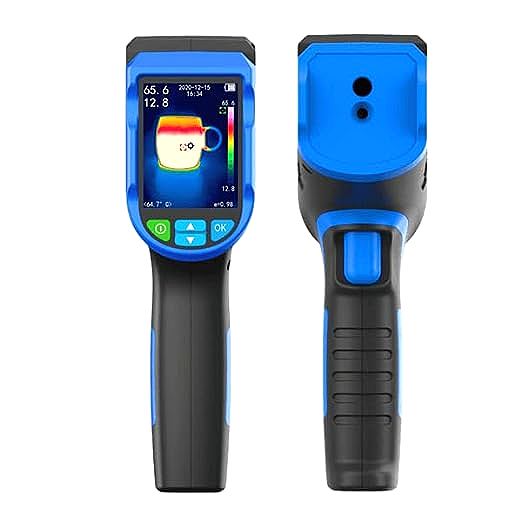
The YuqiaoTime HT-18 Plus disrupts this landscape by bringing 256x192 resolution—a spec formerly reserved for four-figure devices—into the budget tier. It represents a shift from “seeing heat” to “diagnosing problems.”
This article deconstructs the engineering behind the HT-18 Plus, explaining why pixel density is the only spec that matters when you are trying to find a pinhole leak in a wall or an overheating resistor on a circuit board.
The Mathematics of Clarity: 49,152 Pixels vs. The Rest
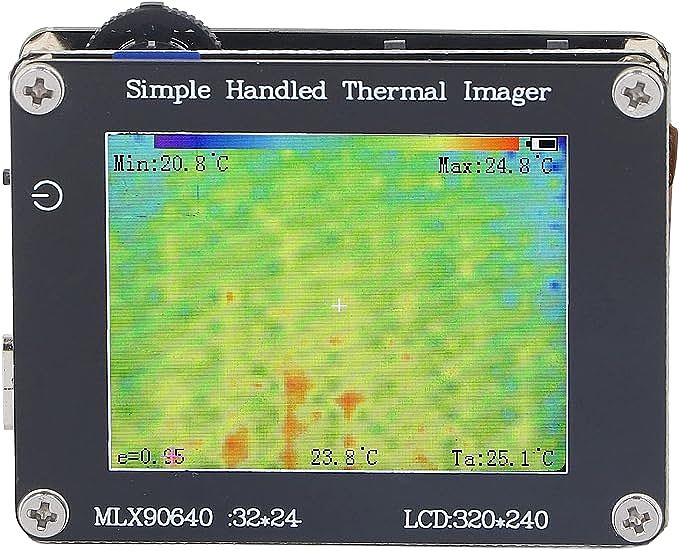
In thermal imaging, resolution is not just about pretty pictures; it is about measurement granularity. * Entry Level (80x60): 4,800 pixels. Good for finding a hot engine, useless for finding a small leak. * Mid-Range (160x120): 19,200 pixels. Better, but still pixelated at distance. * HT-18 Plus (256x192): 49,152 pixels. This provides 2.5 times the data of standard mid-range cameras.
Why It Matters: When inspecting an electrical panel, a low-res camera might show a fuzzy “hot area.” The HT-18 Plus has enough density to show you exactly which breaker screw is loose. It turns a guess into a diagnosis.

Seeing the Invisible: Water Leak Physics
One of the most powerful applications for this device is water leak detection. But thermal cameras don’t see water; they see temperature differences. * Evaporative Cooling: As water seeps into drywall or insulation, it evaporates, absorbing heat and cooling the surrounding material. * Thermal Inertia: Wet insulation holds temperature differently than dry insulation.
With its 40mk thermal sensitivity, the HT-18 Plus can detect temperature variances as small as 0.04°C. This allows you to trace the “cold blue veins” of a leak back to its source behind a wall, potentially saving thousands in demolition costs.

The 25Hz Advantage: Fluidity in Motion
Many budget thermal cameras are locked at 9Hz (9 frames per second) due to export regulations. This results in a choppy, stuttering image that is disorienting when you move the camera.
The HT-18 Plus operates at 25Hz, providing smooth, real-time video. * Scanning Large Areas: You can walk down a hallway scanning for insulation gaps without stopping to let the image “catch up.” * Tracking Moving Targets: Whether it’s a running machine part or an animal in the yard, the fluid refresh rate keeps the image sharp and interpretable.
Electrical Diagnostics: Safety Through Distance
Electrical faults almost always manifest as heat before they fail. A loose connection increases resistance, which generates heat (Joule heating).
Using the HT-18 Plus, you can scan a breaker box from a safe distance. The Automatic Hot Spot Tracking feature instantly places a crosshair on the hottest pixel in the frame, ensuring you don’t miss a dangerous 200°F wire hidden among normal 90°F wires. It’s a non-contact safety audit for your entire home grid.

Built for the Job Site
Despite its sophisticated sensor, the HT-18 Plus is built with a rugged, grip-friendly housing. * Power: The massive 5000mAh battery offers up to 12 hours of runtime, far exceeding the typical 4-5 hours of competitors. * Analysis: It supports PC connectivity, allowing you to upload images and perform detailed temperature analysis later—a crucial feature for generating reports for insurance or repair quotes.

Conclusion: The ROI of Vision
The YuqiaoTime HT-18 Plus is an investment in “preventative vision.” It allows you to see insulation gaps that are raising your energy bills, water leaks that are rotting your studs, and electrical faults that are threatening your safety.
At its price point, it democratizes a technology that was once the exclusive domain of specialists. It turns any homeowner into a building diagnostician, providing the data needed to fix problems before they become disasters.