The 1-Second Audit: Why the Guide T120 is the Ultimate "Grab-and-Go" Thermal Tool for Techs
Update on Nov. 28, 2025, 10:22 a.m.
In the field of facility maintenance and home inspection, the most annoying bottleneck isn’t the measurement itself—it’s the wait. Most thermal cameras act like miniature computers, requiring 30 to 60 seconds to boot up and calibrate. For a technician inspecting 50 electrical panels a day, that downtime adds up to nearly an hour of staring at a loading screen.
The Guide Sensmart T120 solves this specific pain point with a feature rarely found in its price class: 1-Second Boot-Up.
But speed is nothing without clarity. This article analyzes the T120 not just as a fast camera, but as a balanced 120x90 resolution instrument designed to replace fragile smartphone dongles and sluggish entry-level imagers.
The Workflow Revolution: Instant-On
The T120 is engineered for “intermittent inspection.” Unlike a multimeter that is always ready, thermal cameras are power-hungry and often kept off to save battery. * The Old Way: Walk to panel, turn on camera, wait 45 seconds, scan, turn off. Repeat 50 times. * The T120 Way: Walk to panel, press power, scan instantly, turn off.
This responsiveness transforms the thermal camera from a “special occasion” tool into a “first response” tool. You are more likely to check a suspicious breaker if your tool is ready as fast as you are.
120x90: The Resolution “Sweet Spot”
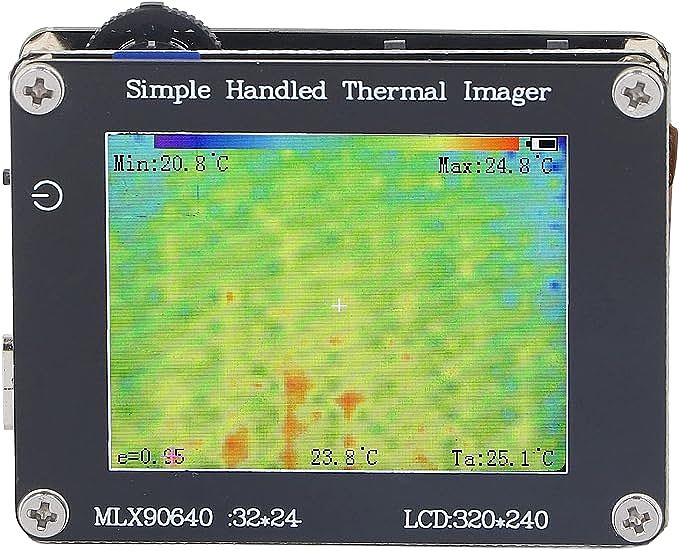
Entry-level thermal sensors typically offer 80x60 pixels (4,800 data points). While cheap, they produce “blobby” images where it’s hard to distinguish a neutral wire from a hot phase.
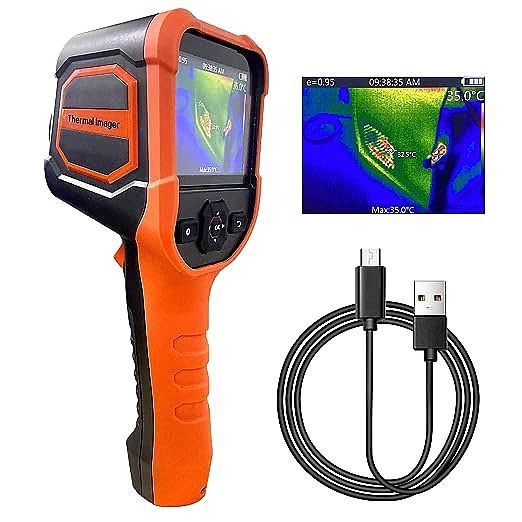
The T120 utilizes a 120x90 WLP IR module, delivering 10,800 pixels—more than double the data of standard entry-level units. * Electrical Context: At this resolution, you can clearly see which specific breaker in a row is overheating, rather than just seeing a hot glow in the general area. * HVAC Diagnostics: You can trace the exact path of radiant floor heating coils or identify specific blockage points in a radiator, rather than just seeing a warm zone.
It provides enough detail to make a diagnosis without the price tag of a 320x240 professional unit.
Built for the Tool Bag, Not the Lab
Smartphone thermal attachments are popular, but they are fragile. One drop, and you’ve broken the connector or your phone port.
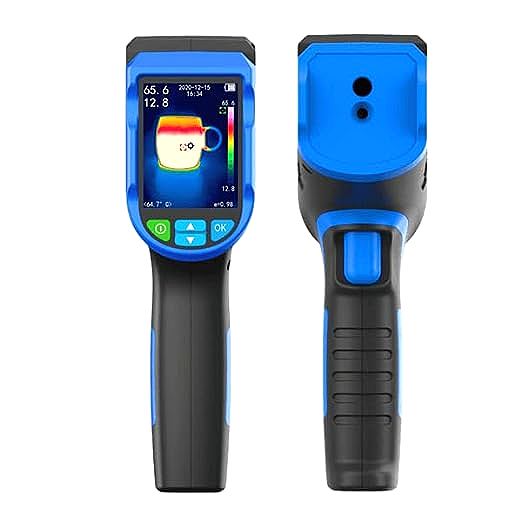
The T120 is a standalone tool built to IP54 standards. * Durability: It is dust-protected, splash-resistant, and tested to survive a 2-meter drop onto concrete. * Ergonomics: Its pistol-grip design with large, tactile buttons is designed for gloved hands. You don’t need to take off your work gloves to navigate a touchscreen menu.
Efficiency Metrics
- Battery Life: With an 8-hour runtime, it outlasts almost any smartphone-attached camera (which drains the phone’s battery rapidly).
- Charging: The USB-C interface supports 2-hour fast charging, meaning a quick top-up during lunch keeps you going for the rest of the shift.
Conclusion: The pragmatic Choice
The Guide Sensmart T120 is not trying to replace a $10,000 scientific camera. It is designed to replace the infrared thermometer in your tool belt. By adding visual context (thermal imaging) with the speed of a point-and-shoot thermometer, it offers the best of both worlds.
For electricians, HVAC techs, and home inspectors who need to find problems fast without babying their equipment, the T120 is the definition of a workhorse.