Demystifying Thermal Imaging: Why 9Hz and 160x120 Pixels Are Smarter Than You Think
Update on Oct. 7, 2025, 5:41 a.m.
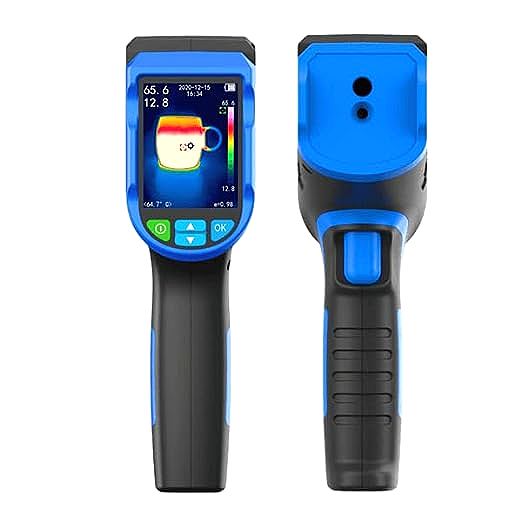
In our technology-saturated world, we’ve been conditioned by a simple, powerful mantra: bigger is better. More megapixels in our cameras, more gigahertz in our processors, higher refresh rates on our screens. We chase bigger numbers on a spec sheet, believing they are an undeniable proxy for quality and performance. So, it can be profoundly confusing when you first encounter a piece of professional equipment, like the Fluke Ti100 thermal imager, that costs thousands of dollars yet boasts specifications that seem… underwhelming. A 9Hz refresh rate? A 160x120 pixel resolution?
This apparent paradox is a gateway to a deeper understanding. The world of infrared thermography operates on a different set of principles, governed by the physics of heat, the economics of exotic materials, and the realities of global trade. To truly appreciate this technology, we must move beyond the siren song of bigger numbers and learn to appreciate the elegant trade-offs of purpose-built engineering. It’s time to bust some myths.
Myth #1: “A 9Hz Refresh Rate is Unusably Slow”
Let’s dive into our first, and perhaps most common, misconception. You’ve just unboxed your new thermal imager, you check the specs, and you see “9Hz.” Your gamer brain screams, “That’s slower than a slideshow!” But before you pack it up for a return, let’s explore why that number might just be one of the smartest features of the device.
Think of a refresh rate like the pages of a flipbook. A 60Hz screen is flipping 60 pages per second, creating smooth motion. A 9Hz thermal imager is flipping 9 thermal “pages” per second. The crucial question is: how fast is your subject changing? For its primary job in maintenance and building inspection, a thermal camera is looking at targets that are thermally static or change very, very slowly. An overheating electrical busbar, a patch of wet insulation, or a failing motor bearing do not change their thermal signature on a millisecond basis. For these targets, capturing 9 distinct thermal “snapshots” every second is more than enough to detect, measure, and document the problem with precision. High refresh rates are critical for observing thermally dynamic events, like the heat dispersion on a race car’s tires, but for a hot breaker, it’s overkill.
More importantly, 9Hz is a “magic number” dictated by international trade regulations. Thermal cameras with refresh rates above 9Hz are often classified under regulations like the U.S. ECCN 6A003 as “dual-use” technology (having both commercial and potential military applications). This means their sale and export are strictly controlled and require special licensing. By designing a general-purpose professional tool at the 9Hz threshold, manufacturers like Fluke ensure that this vital technology can be easily accessed by technicians and engineers all over the world without navigating a complex web of paperwork.
Busted: 9Hz isn’t “slow”; it’s a deliberate, intelligent design choice. It’s perfectly suited for the physics of its intended application and engineered for global accessibility.
Myth #2: “160x120 Resolution is Obsolete”
Alright, so we’ve established that 9Hz is a feature, not a flaw. But what about that resolution? In an age where our phones have more megapixels than we can count, why does a professional tool have a resolution that sounds like it came from the early 2000s? The answer lies in the exotic science of the sensor itself.
The sensor in your phone camera is a CMOS chip, designed to detect visible light and mass-produced by the billions. The sensor in a thermal imager is a focal plane array of microbolometers, tiny, intricate devices that must physically heat up and change resistance when struck by long-wave infrared radiation. These are fundamentally more complex and expensive to manufacture per pixel. That is why a thermal camera with 19,200 pixels (160x120) costs thousands, while a 12-megapixel (12,000,000 pixel) phone is a fraction of the price.
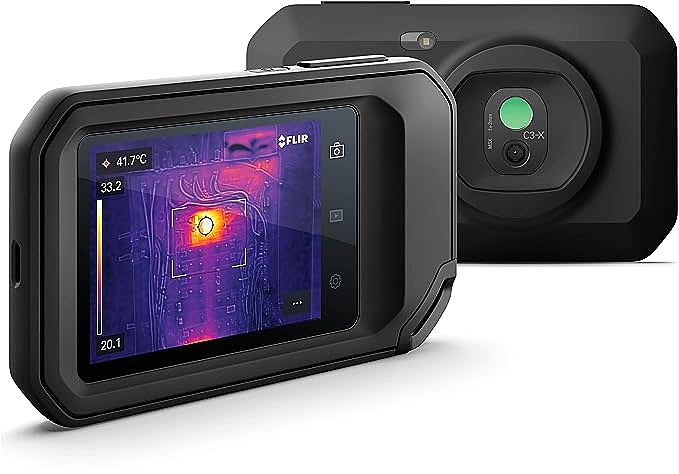
Engineers, aware of this cost-performance trade-off, developed a brilliant solution: image blending. Our eyes are phenomenal at resolving spatial detail, while the thermal sensor excels at detecting thermal contrast. Technologies like Fluke’s IR-Fusion® leverage both. The imager captures a thermal image and a standard visible-light photo simultaneously, then intelligently fuses them. This overlays the sharp edges and details from the visible world onto the thermal data. The result? You get the precise temperature information you need, perfectly contextualized, making it easy to identify exactly which component is overheating. It’s a clever way to augment the “sufficient” thermal resolution with the “abundant” visual resolution we all carry.
Busted: Comparing thermal to visual resolution is apples and oranges. A 160x120 thermal resolution, when augmented by smart software like image blending, provides the necessary diagnostic data for a huge range of professional tasks without an exorbitant price tag.
Myth #3: “Thermal Cameras Can See Through Walls”
Now that we understand the “what” and “how many” of thermal pixels, let’s tackle the most cinematic myth of all—the idea of thermal X-ray vision. Popular culture shows spies using thermal to see people moving through concrete walls. The reality is both less magical and far more scientifically interesting, and it all comes down to how heat travels.
Heat moves in three ways: conduction (through direct contact), convection (through fluid movement like air or water), and radiation (through electromagnetic waves). A thermal camera is a specialized detector for that last one—it only sees the infrared radiation being emitted from the immediate surface of an object. It cannot see through solid objects.
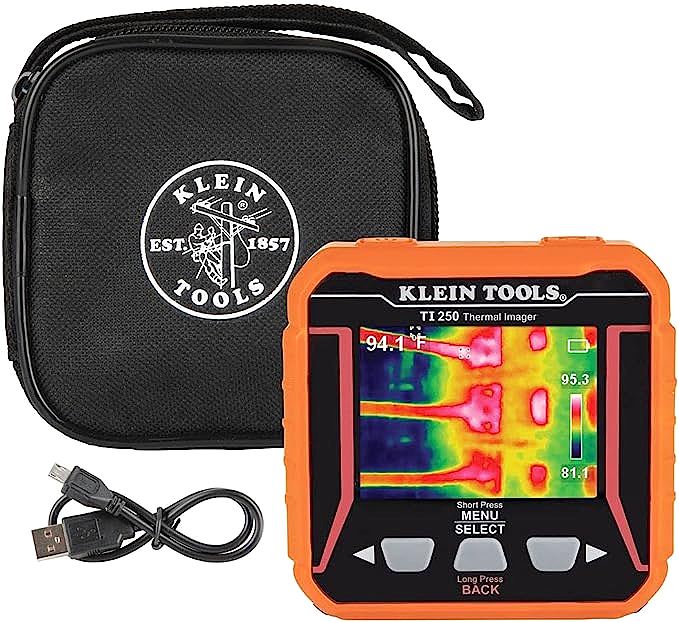
So why can you “see” wall studs or a water leak? You’re not seeing the stud itself; you’re seeing its thermal “footprint.” The wood stud and the drywall around it have different thermal properties. The stud transfers heat at a different rate, causing the surface of the drywall directly in front of it to be a slightly different temperature than the surrounding area. A water leak behind a wall cools the drywall’s surface through evaporation. The camera sees these subtle surface temperature differences, allowing you to make an intelligent, evidence-based inference about what is happening beneath.
Busted: Thermal cameras don’t have X-ray vision. They are incredibly sensitive surface thermometers that read the thermal story written on the surface of things, allowing you to deduce the plot happening behind the scenes.
Conclusion: Beyond the Spec Sheet—Becoming an Informed Technologist
We started with a simple question: why do expensive, professional tools have specs that seem low? The answers, we’ve found, are far from simple. They are a complex interplay of physics, material science, clever software engineering, and even international policy. The “limitations” of a 9Hz refresh rate or a 160x120 resolution are, in fact, cornerstones of a thoughtful design philosophy. They represent a product engineered not just to be powerful, but to be accessible, practical, and perfectly aligned with the real-world tasks of its user.
True technical literacy isn’t found in memorizing the highest numbers. It’s found in understanding why the numbers are what they are. It’s the ability to look at a tool like the Fluke Ti100 and see not a list of specifications, but a series of deliberate, intelligent choices made to solve a problem effectively and efficiently. The goal is to be an informed technologist—one who chooses the smartest tool for the job, not just the one that shouts the loudest on a spec sheet.