The Smartphone Superpower: Why FLIR ONE Pro's VividIR and MSX Tech Make It the Ultimate Pocket Diagnostic Tool
Update on Nov. 28, 2025, 10:36 a.m.
The promise of “thermal imaging on your phone” has often been let down by blurry, low-resolution blobs. Early mobile thermal cameras were fun toys, but they lacked the clarity for serious work.
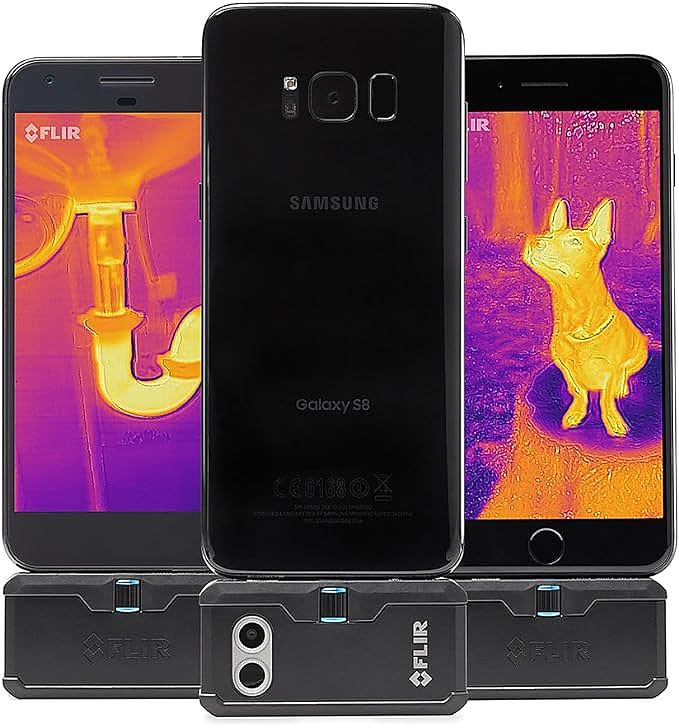
The FLIR ONE Pro changes that narrative. It is not a toy; it is a miniaturized professional instrument. By combining a higher-resolution sensor with two proprietary image processing technologies—VividIR™ and MSX®—it delivers image quality that rivals standalone cameras costing twice as much.
This article analyzes the engineering behind the FLIR ONE Pro, explaining why its 160x120 thermal resolution and 400°C temperature range make it a legitimate tool for home inspectors, electricians, and HVAC technicians who need diagnostics in their pocket.
The Resolution Leap: 19,200 Thermal Pixels
To understand the Pro’s value, you must compare it to the base model. The standard FLIR ONE (Gen 3) has a thermal resolution of 80x60 (4,800 pixels).
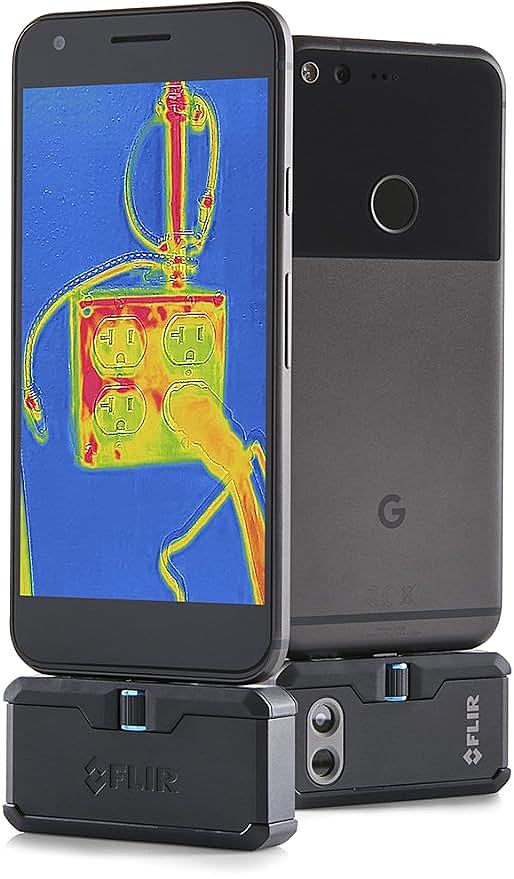
The FLIR ONE Pro features a 160x120 Lepton sensor, delivering 19,200 pixels—a 4x increase in thermal data. * The Practical Difference: With 4,800 pixels, a fuse box looks like a hot blur. With 19,200 pixels, you can identify exactly which fuse is overheating. Resolution isn’t just about sharpness; it’s about diagnostic confidence.
The Secret Sauce: VividIR™ and MSX®
Hardware is only half the story. FLIR’s dominance comes from its software processing.
- VividIR™ (Super-Resolution): This is not just digital sharpening. VividIR uses advanced signal processing to combine data from multiple frames, effectively boosting the perceived resolution of the thermal image. It cleans up “thermal noise” and enhances edge definition, making subtle temperature differences pop.
- MSX® (Multi-Spectral Dynamic Imaging): Thermal images often lack context. Is that hot spot on the wall a pipe or a wire? MSX uses the phone’s visible light camera to extract edge details (like writing on a breaker or the outline of a doorframe) and embosses them onto the thermal image. The result is a thermal image with the clarity of a photograph.
Pro-Grade Measurement: -4°F to 752°F
Most budget thermal cameras max out around 150°C (302°F). The FLIR ONE Pro extends its range up to 400°C (752°F). * Why It Matters: This expanded range allows for automotive diagnostics (exhaust manifolds, brake rotors) and industrial electrical work, where temperatures often exceed the limits of consumer-grade sensors. * Triple Spot Meters: The app allows you to place up to three movable measurement spots or regions of interest (ROI) on the screen, giving you simultaneous readings of different components—critical for comparing phase loads in a breaker panel.
The OneFit™ Connector: Case-Friendly Design
A small but game-changing feature is the OneFit™ Adjustable Connector. * The Problem: Most phone accessories require you to remove your protective case to plug them in—a hassle that leads to dropped phones. * The Solution: A dial on the FLIR ONE Pro extends the USB-C (or Lightning) connector by up to 4mm, allowing it to reach through even thick, ruggedized cases like OtterBox. It’s a simple mechanical fix that makes the device infinitely more usable in the field.
The Battery Compromise
If there is an Achilles’ heel, it is battery life. The FLIR ONE Pro has its own internal battery (to avoid draining your phone) that lasts approximately 1 hour. * The Workflow: This is not a “leave it on all day” device. It is a “spot check” tool. You pull it out, scan a room or a panel, capture the image, and turn it off. For continuous monitoring, you need a standalone gun; for rapid troubleshooting, 1 hour is plenty.
Conclusion: The Contractor’s EDC
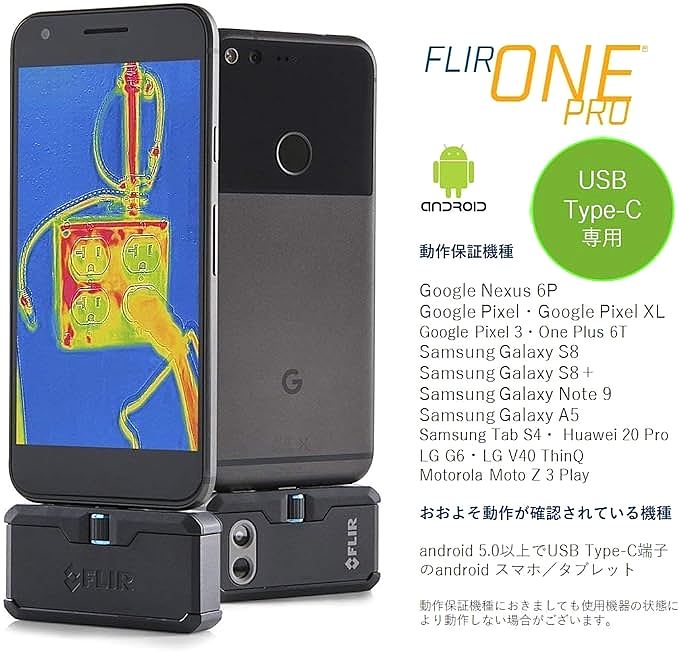
The FLIR ONE Pro bridges the gap between “gadget” and “tool.” It brings the power of a $1,000 thermal camera into a form factor that fits in your shirt pocket.
For home inspectors looking for water leaks, electricians hunting for hotspots, or homeowners auditing their insulation, the combination of 160x120 resolution, MSX clarity, and VividIR processing makes it the undisputed king of mobile thermal imaging. It turns the phone you already carry into the most powerful diagnostic tool you own.