The Resolution Trap: A Critical Guide to Thermal Camera Specs
Update on Oct. 7, 2025, 8:52 a.m.
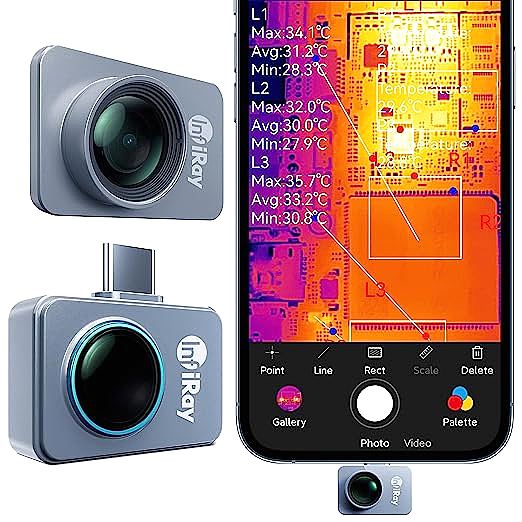
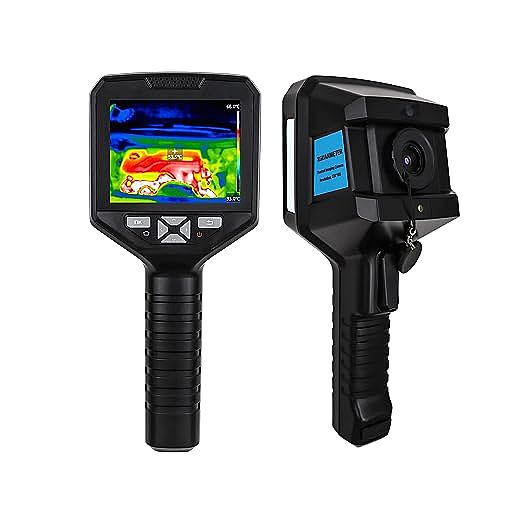
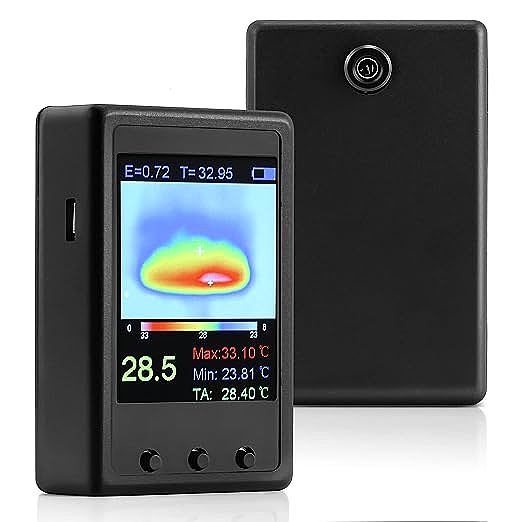
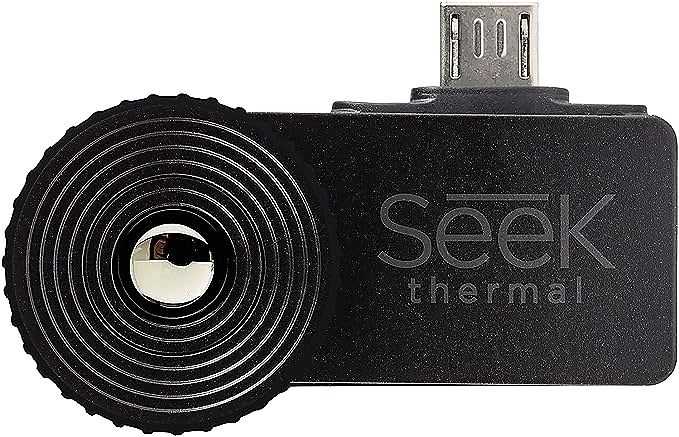
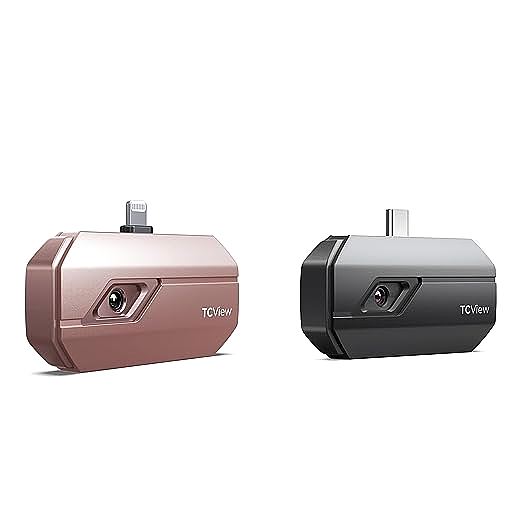
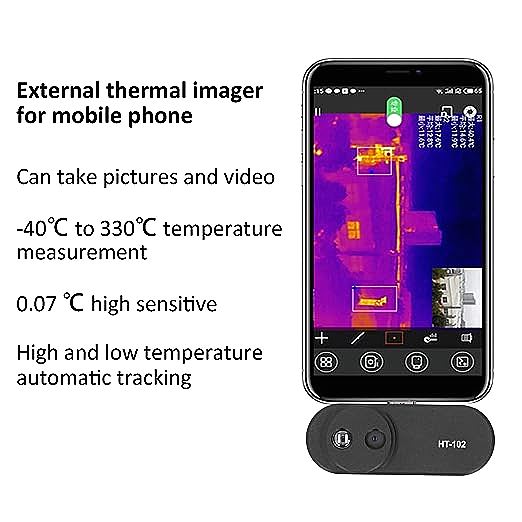
Welcome to the crime scene. The victim: a confused consumer. The weapon of choice: a set of cleverly worded technical specifications. Exhibit A is a product listing for a smartphone thermal camera found on a popular online marketplace. In bold, attention-grabbing letters, the title proclaims “HD 640 x 480 Resolution Thermal Imager.” The price is tempting, a fraction of what established brands charge. But then, a diligent shopper scrolls down, deep into the product details, past the marketing copy, and finds a single, contradictory line item: Infrared Image Resolution: 32 x 32.
Suddenly, the case is wide open. Is it 640x480, a number we associate with standard definition video? Or is it 32x32, a number that sounds suspiciously small? Does this discrepancy even matter? The answer is a resounding, unequivocal yes. This isn’t just a typo; it’s a clue that leads us directly into the heart of the consumer thermal imaging market, a place where a little bit of foundational knowledge can save you from a great deal of frustration and wasted money. Let’s put on our detective hats and solve the case of the conflicting specifications.
The Prime Suspect: Unmasking “Resolution”
In the world of thermal imaging, one suspect is responsible for nine-tenths of the performance, the price, and the potential for confusion. That suspect’s name is Native Infrared Resolution.
The Only Number That Truly Matters
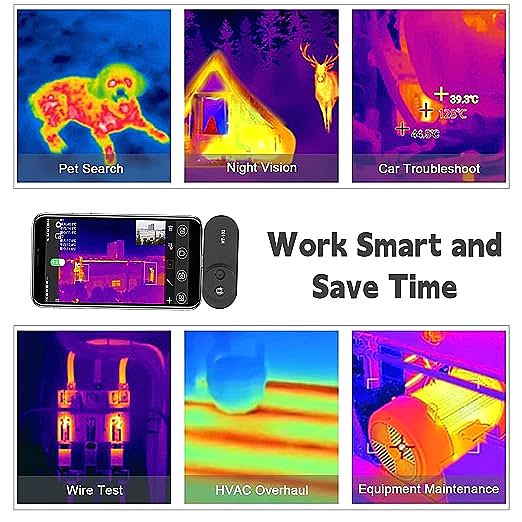
Forget every other specification for a moment. The native IR resolution is the physical number of individual heat-detecting pixels on the camera’s sensor (a sophisticated component called a microbolometer). It is the absolute, unchangeable bedrock of the image quality. A 32x32 sensor has a physical grid of 32 pixels across by 32 pixels down, resulting in a total of exactly 1,024 pixels. Each of these pixels measures a single temperature and contributes one colored square to the final image you see.
The critical insight is that the difference between resolutions isn’t linear; it’s exponential. Let’s look at the evidence laid bare:
- 32 x 32: 1,024 total pixels (The “ultra-budget” tier)
- 80 x 60: 4,800 total pixels (A common “entry-level” spec)
- 160 x 120: 19,200 total pixels (Considered “good” for many prosumer tasks)
- 320 x 240: 76,800 total pixels (Genuine professional-grade)
- 640 x 480: 307,200 total pixels (High-end, for industrial or scientific use)
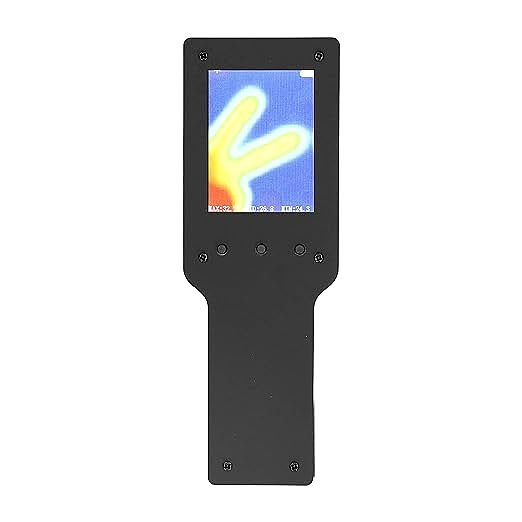
A 160x120 camera doesn’t have five times the detail of a 32x32 camera; it has 18.75 times the raw thermal data. This is a staggering difference. Think of it like a fishing net. A 32x32 net has giant holes and can only catch a whale (a massive, obvious temperature difference, like a hot stove). A 160x120 net has a much finer mesh; it can catch smaller, more interesting, and often more important fish (like an overheating chip on a circuit board or a subtle moisture spot in a ceiling).
The Accomplices: How Other Numbers Can Deceive
So where does the misleading “640x480” in our case’s title come from? It’s usually one of two known accomplices, working to obscure the truth:
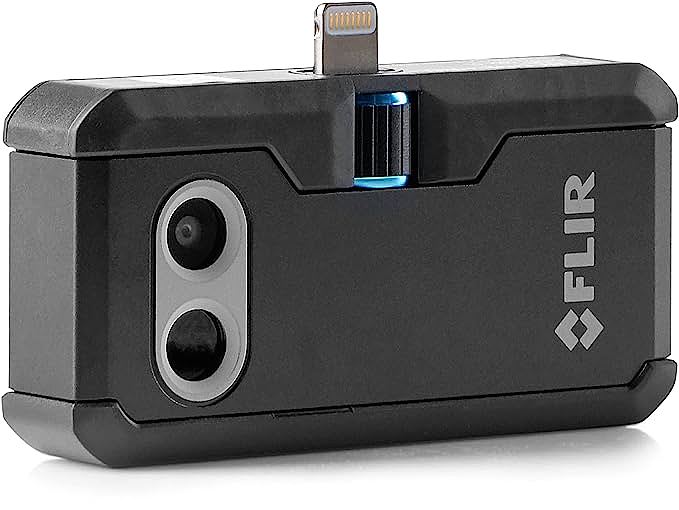
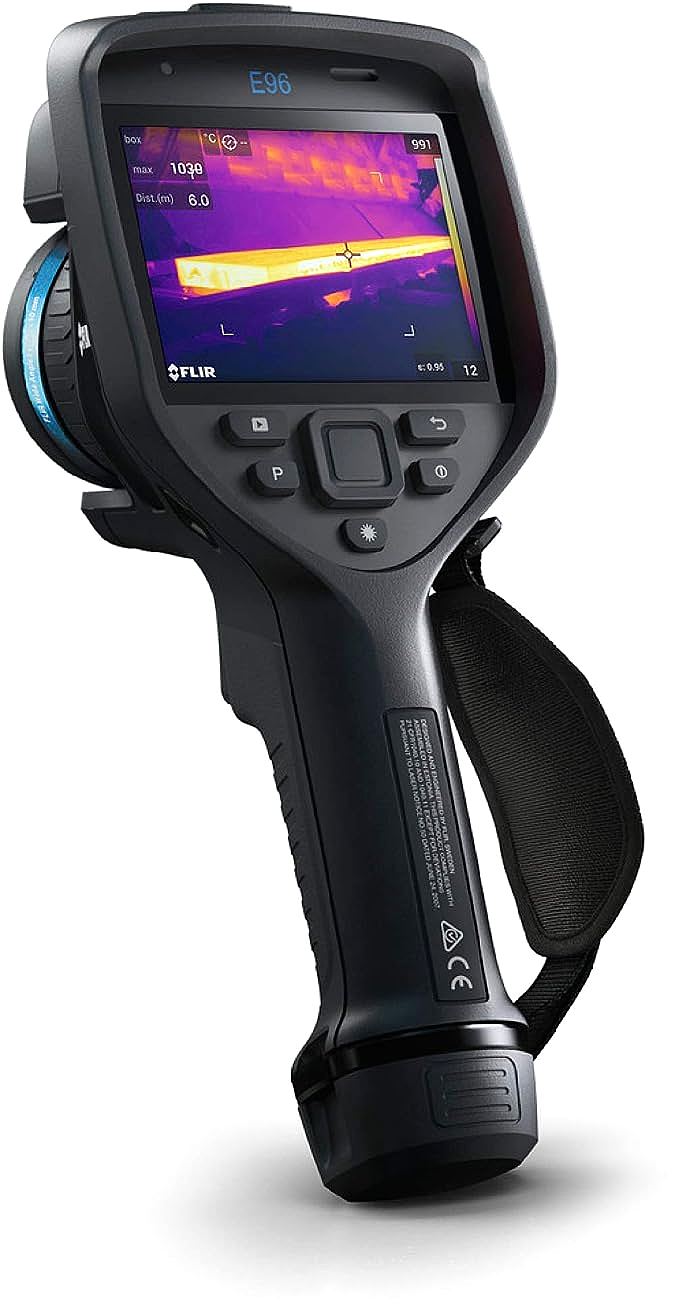
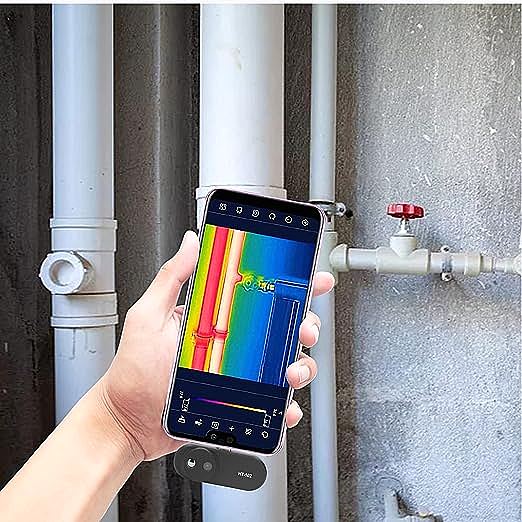
- The Visible Light Camera: Most thermal imagers include a standard digital camera right next to the thermal sensor. It’s often this ordinary camera that has the 640x480 resolution. This is used for clever technologies like FLIR’s patented MSX®, which overlays visual details (like lines, edges, and numbers) onto the thermal image to give it context. This is a fantastic, genuinely useful feature—but it’s like laying a beautifully detailed line drawing on top of a blurry, blocky watercolor painting. If the underlying thermal watercolor is only 32x32, the image is still fundamentally blurry.
- Software Interpolation: This is a software trick that takes the 1,024 real pixels and makes a mathematical guess as to what the colors should be in between them to create a larger-looking image. It’s the digital equivalent of taking a tiny, pixelated photo from an old flip phone and just stretching it to fit a large monitor. The image gets bigger, but no new thermal detail is created. It’s just a bigger, smoother blur.
Gathering More Evidence: Key Specs Beyond Resolution
Once you’ve pinned down the native IR resolution, you can interrogate the other specifications to build a complete profile of the camera’s capabilities. These are the details that separate good tools from great ones.
- Thermal Sensitivity (NETD): This measures the smallest temperature difference the camera can detect, expressed in milliKelvins (mK). A lower number is better. A camera with a high NETD (e.g., >100mK) is “hard of hearing” for heat; it will produce a visually noisy, grainy image and will miss subtle thermal anomalies. A professional-grade camera might have an NETD of <50mK, allowing it to see the faint heat signature of a wooden stud behind drywall.
- Refresh Rate: Measured in Hertz (Hz), this tells you how many times per second the image updates on the screen. Most consumer cameras are 9Hz due to international export regulations designed to prevent their use in military applications. This is perfectly fine for looking at static objects, but if you pan the camera quickly across a scene, it will feel like a stuttering slideshow. Cameras with higher refresh rates (30Hz or 60Hz) provide a much smoother, real-time video feed but are more expensive and much more heavily regulated.
The Detective’s Handbook: Your 3-Step Pre-Purchase Interrogation
You are now equipped to be a savvy buyer. Before you purchase any thermal camera, from a $150 gadget to a $1500 tool, conduct this simple three-question interrogation of the product and its seller:
- “What is the NATIVE INFRARED RESOLUTION of the sensor?” This is the single, non-negotiable, knockout question. Ignore the title. Ignore the visible camera specs. Ignore claims of “software enhancement.” If the seller or manufacturer cannot or will not give you this specific number clearly and confidently, walk away.
- “What is my typical target, and from how far away?” The answer to this determines the resolution you actually need. If you’re inspecting a distant electrical substation, you need very high resolution. If you’re checking a circuit board from six inches away, you need high resolution. If you’re looking for an entire missing section of insulation in your attic from six feet away, a lower resolution (like 80x60) might suffice.
- “What is the smallest temperature difference I need to be able to see?” This question points directly to the NETD you require. If you’re a home inspector looking for subtle signs of moisture caused by evaporation (which creates very small temperature changes), you need a low NETD. If you’re just checking to see if your pizza stone is hot, it’s far less critical.
Case Closed: From Confused Buyer to Empowered Expert
The case of the conflicting specs is officially closed. The confusion sown in the marketplace is not always accidental; it sometimes feels like a deliberate strategy that preys on a lack of consumer knowledge. But now, you have that knowledge. You understand that the foundation of any thermal camera is its native IR resolution, and you know how to see past the smoke and mirrors of software tricks and irrelevant numbers.
This isn’t to say all low-resolution cameras are a “scam.” An honestly marketed 32x32 camera sold at a price that reflects its severe limitations has its place, perhaps as a novelty item or educational toy. The true trap is the device that claims the power of a professional tool but delivers the vision of a child’s toy. By arming yourself with the right questions, you transform from a potential victim into an empowered expert, ready to make an informed decision and invest wisely in the truly powerful world of thermal imaging.