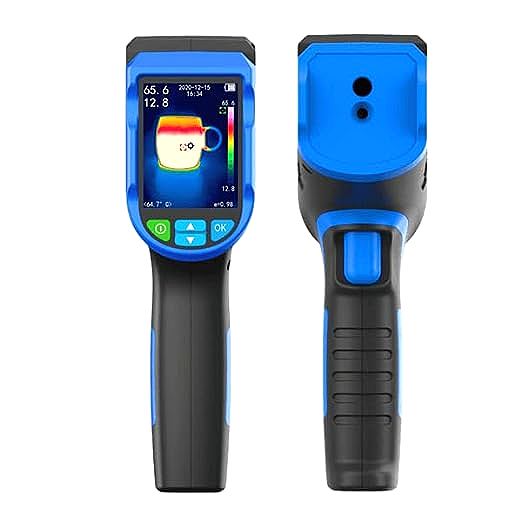
The Truth About Pixels: Why a $130 Thermal Camera is Both a Toy and a Tool
Update on Oct. 7, 2025, 2:09 p.m.
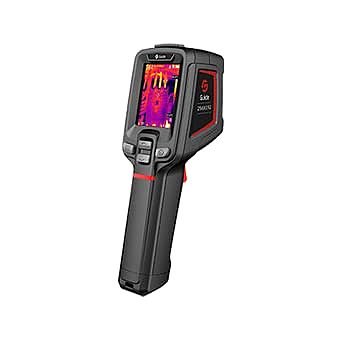
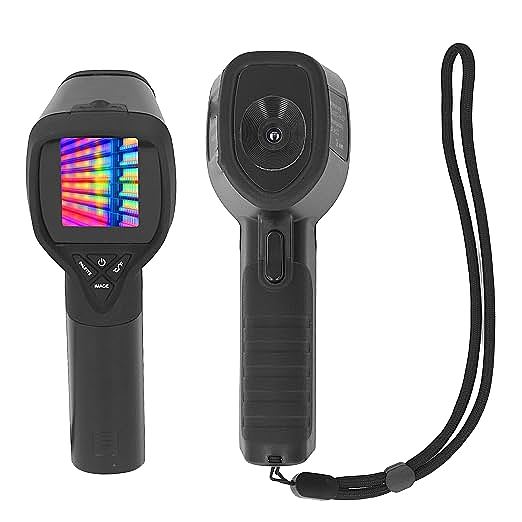
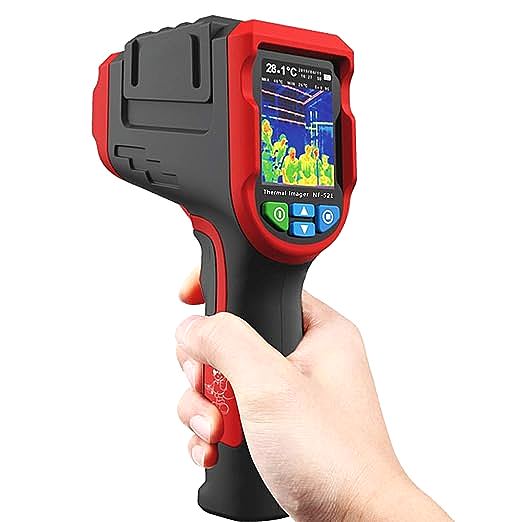
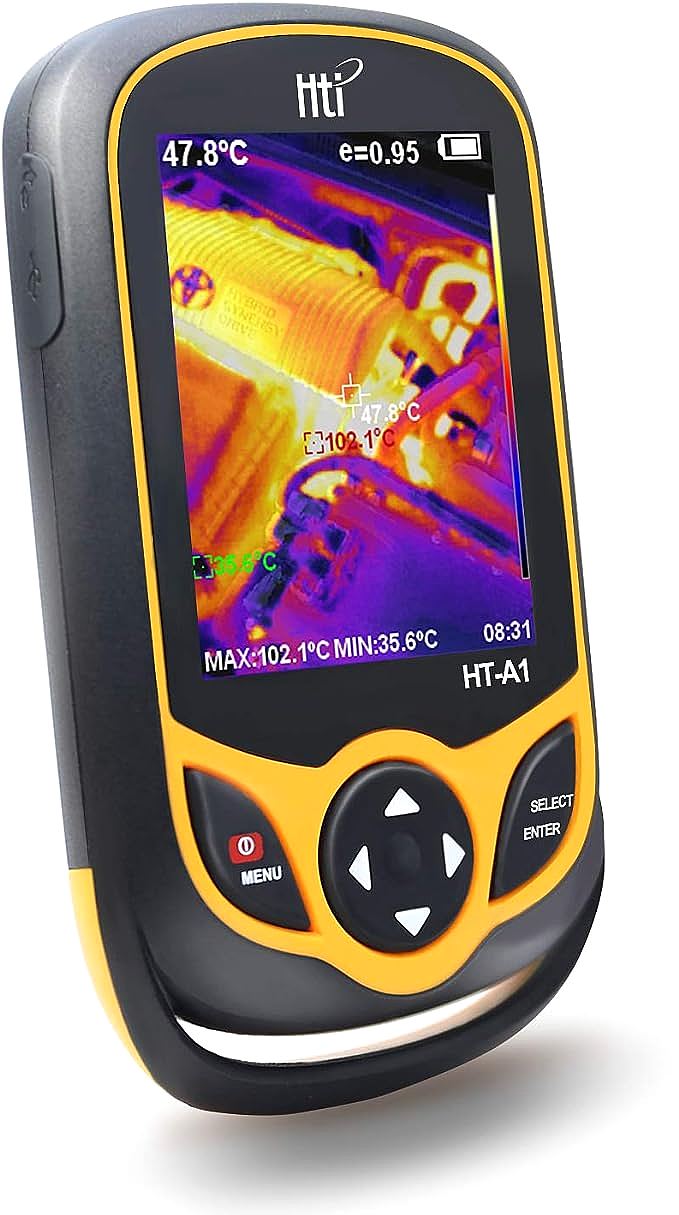
Look at the image. It’s a blurry, pixelated mosaic of color, like a forgotten scene from an 8-bit video game. If someone told you this was a photograph, you’d laugh. If they told you it came from a brand-new camera, you might suspect it’s broken. Yet, for a growing community of makers, engineers, and technicians, a picture exactly like this can be a moment of pure revelation.
This is the strange reality of the entry-level thermal imager. For around $130, devices like the Antstone imager promise to give you the superpower of seeing heat. But they deliver this power through a keyhole of just 32 by 24 pixels. That’s 768 total points of data to represent the entire world in front of you. So, why are we excited about such a blurry picture? What is the real story behind these pixels? This isn’t just a gadget review; it’s an exploration into the fascinating intersection of physical limits and practical engineering, to understand why this device is simultaneously a child’s toy and a professional’s secret weapon.

The 768-Pixel Question: What Can You Really See?
Let’s be brutally honest about what 768 pixels means. Your smartphone camera captures around 12 million pixels. A respectable entry-level professional thermal camera, like a FLIR ONE Pro, has a resolution of 160x120, which is 19,200 pixels. Our budget camera offers a mere 4% of that resolution. It’s not just a small step down; it’s falling off a cliff.
Because of this, we must fundamentally shift our expectations. The purpose of a sub-$150 thermal camera is not imaging; it is detection. You are not buying it to create a detailed, recognizable thermal photograph. You are buying it to find an anomaly—a single, glowing pixel of dissent in a sea of thermal uniformity.
Consider an IR thermometer, the single-pixel cousin of our camera. It’s like a sniper rifle—incredibly precise at one spot, but only if you already know exactly where to aim. A low-resolution thermal camera, on the other hand, is like a wide-angle sonar ping. It won’t show you the fine details of the target, but it will instantly tell you in which quadrant of the vast ocean it exists. When troubleshooting a circuit board with hundreds of components, that initial sonar ping is invaluable for telling you where to even begin looking. That one bright orange square in a field of cool blue on your PCB? That’s not a blurry component; that’s an X-marks-the-spot for a potential short circuit or a failing voltage regulator.
Decoding the Datasheet: Specs That Matter More Than You Think
So, if we’ve established our job is to find the ‘one’ hot pixel, what makes one 768-pixel camera better than another? The answer is buried in the datasheet, in specs that are far more important than the headline resolution number.
Myth: Temperature Range is Everything
A range of -40°C to 300°C sounds impressive. But for diagnosing electronics, you’re almost always working between 20°C and 120°C. For home inspection, the differences you’re looking for might be just a few degrees. A massive range is often less useful than a camera’s ability to discern tiny temperature differences within a narrower, more relevant range.
The Real MVP: NETD (Thermal Sensitivity)
The most important spec you’ve never heard of is Noise Equivalent Temperature Difference (NETD), measured in milliKelvins (mK). Think of it like the ISO noise on a regular camera. A lower NETD means less “thermal noise” and the ability to see finer temperature gradations. A camera with a 150mK NETD might show a wall as a flat, single-color surface. A camera with a <50mK NETD, even at the same low resolution, might reveal the subtle, cooler outlines of the wooden studs behind that wall. It’s the difference between a blurry picture and a blurry picture that contains actual information.
The Pace of Heat: Refresh Rate (Hz)
Refresh rate, measured in Hertz (Hz), tells you how many times per second the image updates. Many budget imagers operate at around 8 or 9Hz. This is perfectly fine for looking at static scenes like a wall or a running engine. But if you’re trying to watch a circuit power up, seeing the heat spread in real-time requires a faster refresh rate, like the 25Hz or 50Hz found on more advanced models.
The Art of Relative Measurement: Hacking Your Limitations
Understanding the specs helps us choose a better tool, but knowing its inherent limitations is what allows us to use it wisely. It’s time to stop worrying about what our cheap thermal camera can’t do and start mastering what it can do exceptionally well: comparing heat.
Forget Absolute Accuracy
The advertised accuracy of ±2°C is a best-case scenario. In the real world, factors like distance and emissivity will affect your readings. The true power of a budget imager lies in relative measurement. Is component A hotter than component B? Is the top of the radiator warmer than the bottom? Is this power supply hotter today than it was yesterday under the same load? These are the questions it can answer with surprising reliability.
The Two-Camera Trick
High-end cameras like FLIRs have a patented technology called MSX that overlays the edges from a visible-light camera onto the thermal image, making it infinitely easier to understand what you’re looking at. You can replicate a crude version of this yourself. Take a thermal image, then, without moving, take a picture with your smartphone. By flicking between the two, you can perfectly align the thermal anomaly with the real-world component that’s causing it.
Conclusion: The Right Tool for the Right Job (Even if it’s a “Bad” Tool)
An entry-level thermal imager is not a replacement for a professional-grade one. It is an entirely different class of tool. It’s a blunt instrument of discovery. In the world of engineering, a tool that solves 80% of the most common problems for 10% of the cost is not a “bad” tool; it’s a revolutionary one.
This blurry, 768-pixel window forces you to understand the fundamental principles of thermography. It strips away the luxury of high-resolution detail and compels you to become an active data interpreter, not just a passive picture-taker. It may look like a toy, but its greatest gift is that it teaches you to think like a professional. And that is a tool of immeasurable value.