Beyond the Pandemic: Why "Heavy Duty" Precision Makes THERMOBIO LE-V21 the Ultimate Home Health Tool
Update on Nov. 28, 2025, 9:53 a.m.
During the height of global health crises, the infrared thermometer became a symbol of rapid screening. But as we move from crisis mode to everyday health management, the requirements for these devices have shifted. Speed is still important, but clinical accuracy and long-term reliability are now paramount.
The THERMOBIO LE-V21 distinguishes itself from the flood of disposable “drug store” gadgets by carrying two specific labels: “Medical Grade” and “Heavy Duty.” These aren’t just marketing buzzwords; they represent a fundamental difference in engineering. This article deconstructs the sensor technology inside the LE-V21 to explain why it delivers hospital-level data in a home setting.
The Physics of Precision: The “150 Data Points” Advantage
Most cheap infrared thermometers take a single snapshot of thermal radiation. If your hand shakes or a draft blows across the forehead at that exact millisecond, the reading is wrong.
The LE-V21 utilizes a Hyper-Precise Infrared Sensor that collects over 150 data points per second. * The Mechanism: When you pull the trigger, the device isn’t just taking one temperature. It is capturing a high-speed stream of thermal data. * The Algorithm: An optimized onboard chip analyzes this stream, discarding outliers (noise) caused by movement or environmental fluctuations, and calculates a statistically stable average. * The Result: A reading that reflects the true core body temperature proxy, rather than a momentary surface fluctuation.

The “Tri-Sensor” Architecture
Accuracy in non-contact thermometry is a battle against variables. Distance, ambient temperature, and skin emissivity all conspire to skew results. The LE-V21 fights back with a Triple-Sensor System:
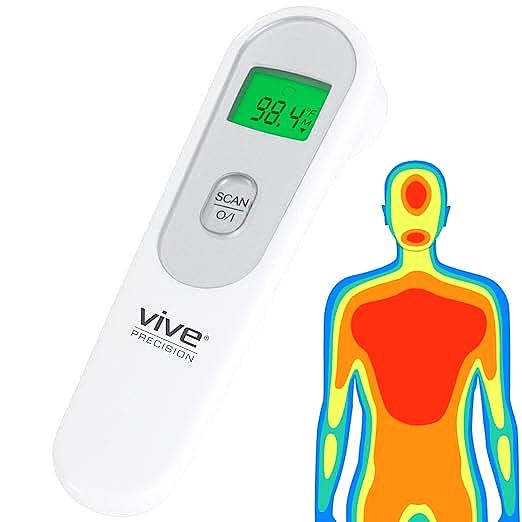
1. Infrared Sensor: Measures the thermal energy emitted by the temporal artery.
2. Ambient Temperature Sensor: Continuously monitors the room temperature to compensate for the “thermal shock” of moving between rooms (e.g., from a cold bedroom to a warm bathroom).
3. Distance Compensation Sensor: Helps ensure the device is held at the optimal 1-2 inch range, critical for maintaining the correct optical resolution.
This triangulation ensures that the device meets ASTM E1965-98 standards for clinical accuracy (typically ±0.4°F within critical ranges).
Defining “Heavy Duty” for the Home
Why does a home thermometer need to be “Heavy Duty”? Because kids get sick at 3 AM, and devices get dropped.
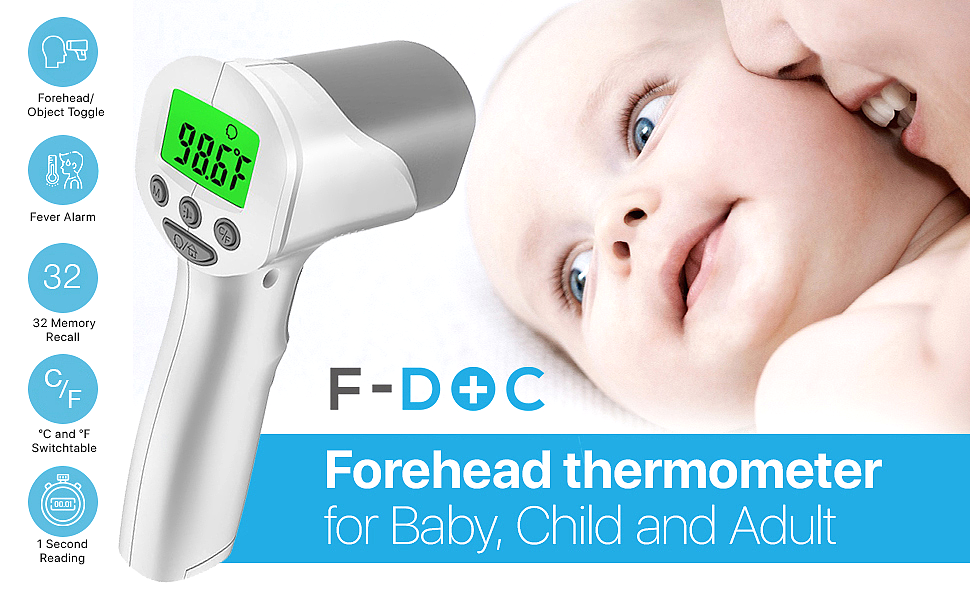
The LE-V21 is stress-tested for over 1,000 hours of continuous usage. Unlike standard units that may drift out of calibration after a few months, this device is engineered for longevity. * Battery Efficiency: The auto-off feature preserves power for thousands of readings on a single set of AAA batteries. * Memory Log: It stores 32 readings, allowing you to track a fever curve over 48 hours without needing a notepad—a crucial feature for reporting symptoms to a pediatrician.

Beyond Fever: The Object Mode Utility
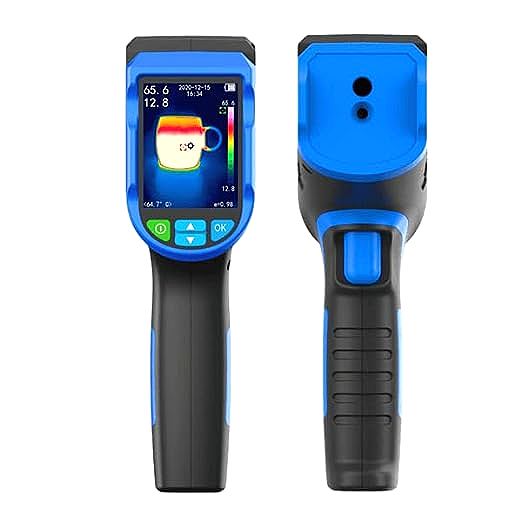
A medical-grade sensor is too valuable to sit in a drawer between illnesses. The LE-V21 features a dedicated Object Mode. * Nursery Logic: Instantly verify the temperature of milk bottles or bathwater without submersion. * Household Utility: Check the surface temperature of a laptop, a drafty window, or even cooking ingredients.
This dual-mode capability transforms it from a “sick day” tool into an everyday utility device.
User Protocol for Maximum Accuracy
Even the best sensor can fail due to user error. To get the most out of the LE-V21:
1. Acclimatization: Allow the thermometer to sit in the room for 15 minutes before measuring if you’ve moved it from a different climate.
2. Clean Skin: Wipe away sweat or move hair aside. Sweat cools the skin via evaporation, leading to false negatives.
3. The Sweet Spot: Aim for the center of the forehead, 1-2 inches away. Too far, and you measure the surrounding air; too close, and you risk cross-contamination.
Conclusion: A Lifetime Investment
The THERMOBIO LE-V21 represents a maturity in consumer health tech. It moves past the “good enough” standard of generic thermometers and offers a robust, data-driven tool. For parents who need to know exactly when a fever breaks, or caregivers monitoring vulnerable seniors, this “Heavy Duty” reliability offers the ultimate peace of mind.