The Disposable Tech Dilemma: Audio as a Consumable
Update on Jan. 14, 2026, 6:08 p.m.
For decades, buying audio equipment was an investment. You saved up, bought a pair of receiver and speakers, or high-end headphones, and expected them to last for years, perhaps decades. Today, we live in a different reality. With products like the BD&M E7S selling for less than the price of a movie ticket, audio gear has crossed the threshold into the realm of Consumables.
Like pens, lighters, and razors, wireless earbuds are becoming items we use, lose, break, and replace without a second thought. This shift creates a complex dilemma. On one hand, it offers unparalleled accessibility and convenience. On the other, it raises serious questions about electronic waste and our relationship with technology.
This article explores the “Disposable Audio” phenomenon. We will analyze the use cases where “cheap” is actually “smart,” the environmental cost of the $9 earbud, and how to maximize the lifespan of these budget marvels to mitigate their impact.
The Case for the “Beater” Earbud
In the car world, a “beater” is a cheap, reliable car you drive when you don’t want to risk damaging your luxury vehicle. The BD&M E7S is the “beater” of the audio world.
Why would you buy them if you already own AirPods Pro or Sony XM5s? Risk Management.
High-Risk Environments
- The Gym/Sauna: Sweat is aggressive. Even IPX4 rated premium buds can succumb to salt corrosion over time. Taking a $250 pair of earbuds into a steam room is financial recklessness. Taking an $9 pair is a calculated risk. If they die, you replace them.
- Travel/Commute: Losing a single AirPod on the subway track is a $90 tragedy. Losing an E7S bud is a minor annoyance. For chaotic environments, high-crime areas, or rugged backpacking trips, the “low-value” item offers peace of mind.
- Sleep: Many people listen to podcasts to fall asleep. Rolling over on expensive earbuds can crush them or hurt your ears. The small, lightweight, and cheap E7S is a perfect “sleep bud” candidate.
This segmentation of usage—Premium for critical listening, Budget for hazardous duty—is a rational strategy for the modern consumer.
The Environmental Shadow: E-Waste
However, the “disposable” mindset has a cost. Every pair of E7S earbuds contains lithium-ion batteries, copper, plastic, and silicon chips.
When these devices fail (and at this price point, quality control is variable, so failure rates are higher), they often end up in the trash.
* Non-Replaceable Batteries: The batteries in TWS earbuds are glued in. They cannot be replaced. Once the chemistry degrades (usually 18-24 months), the device is dead.
* Recycling Difficulty: Because they are so small and glued together for waterproofing, separating the battery from the plastic and copper is economically unviable for most recyclers.
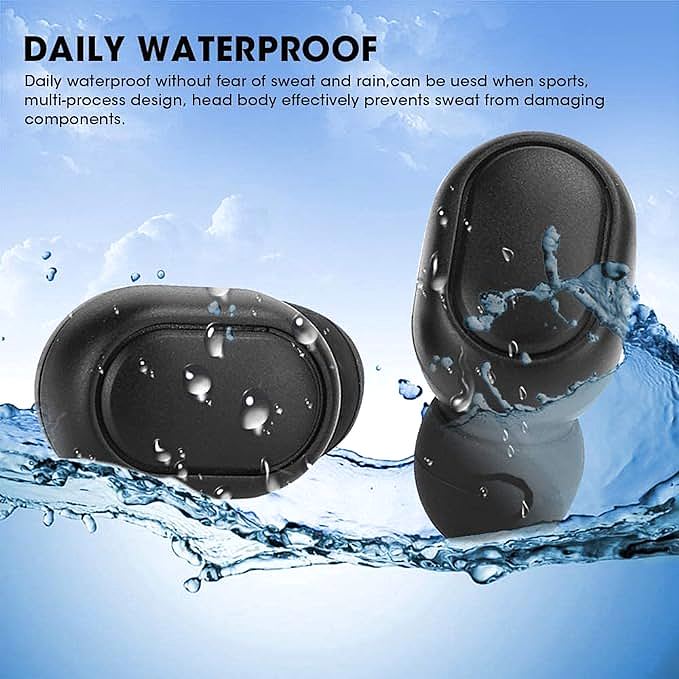
The Ethical Consumer’s Approach: If you buy budget earbuds, commit to using them until they truly fail. Don’t treat them as single-use. The E7S is built with IPX5 waterproofing and Bluetooth 5.0—it can last for years if cared for. Extending the life of a budget product is the most effective form of recycling.
The Psychology of Value: What Do We Actually Hear?
Another dimension of the disposable dilemma is Perceived Value.
Blind listening tests often reveal that non-audiophiles struggle to distinguish between a $50 earbud and a $200 earbud in a noisy environment.
The BD&M E7S operates in the “good enough” zone.
* Masking Effect: On a bus or in a gym, the ambient noise masks the subtle details (high-frequency air, soundstage depth) that premium headphones deliver.
* Content Type: For podcasts, audiobooks, and YouTube videos (speech-heavy content), the fidelity requirements are low. The E7S’s focus on mid-range clarity makes it perfectly adequate for these tasks.
For many users, paying 20x the price for a 10% improvement in audible quality (in their specific use case) is irrational. The E7S validates the idea that for 80% of our daily listening, we don’t need “Hi-Fi”; we just need “Fi”.
Maximizing the Lifespan of Budget Gear
If we accept the role of the E7S as a “utility” device, how do we make it last?
1. Clean the Contacts: The #1 reason budget earbuds “die” is actually just dirty charging pins. Sweat oxidizes the gold plating. A weekly wipe with alcohol can double the lifespan.
2. Don’t Overcharge: Leaving the case plugged in 24/7 degrades the cheap lithium cells faster. Unplug it when full.
3. Dry Before Case: Never put sweaty buds back in the case. The moisture will corrode the charging pins while they are energized.
Conclusion: A Tool, Not a Toy
The BD&M E7S challenges our definitions. Is it e-waste waiting to happen? Or is it a triumph of accessibility?
It is both. It is a tool that democratizes information and entertainment. It allows a construction worker to listen to audiobooks while working, or a student to study in a noisy dorm room, for a negligible cost.
By understanding it as a “Consumable Tool”—like a guitar pick or a tennis ball—we can appreciate its value without ignoring its environmental context. It’s not the last pair of headphones you’ll ever buy, but it might be the most useful pair you own right now.