The Paradox of the Variety Pack: Flavor Science and Consumer Choice
Update on Jan. 14, 2026, 6:07 p.m.
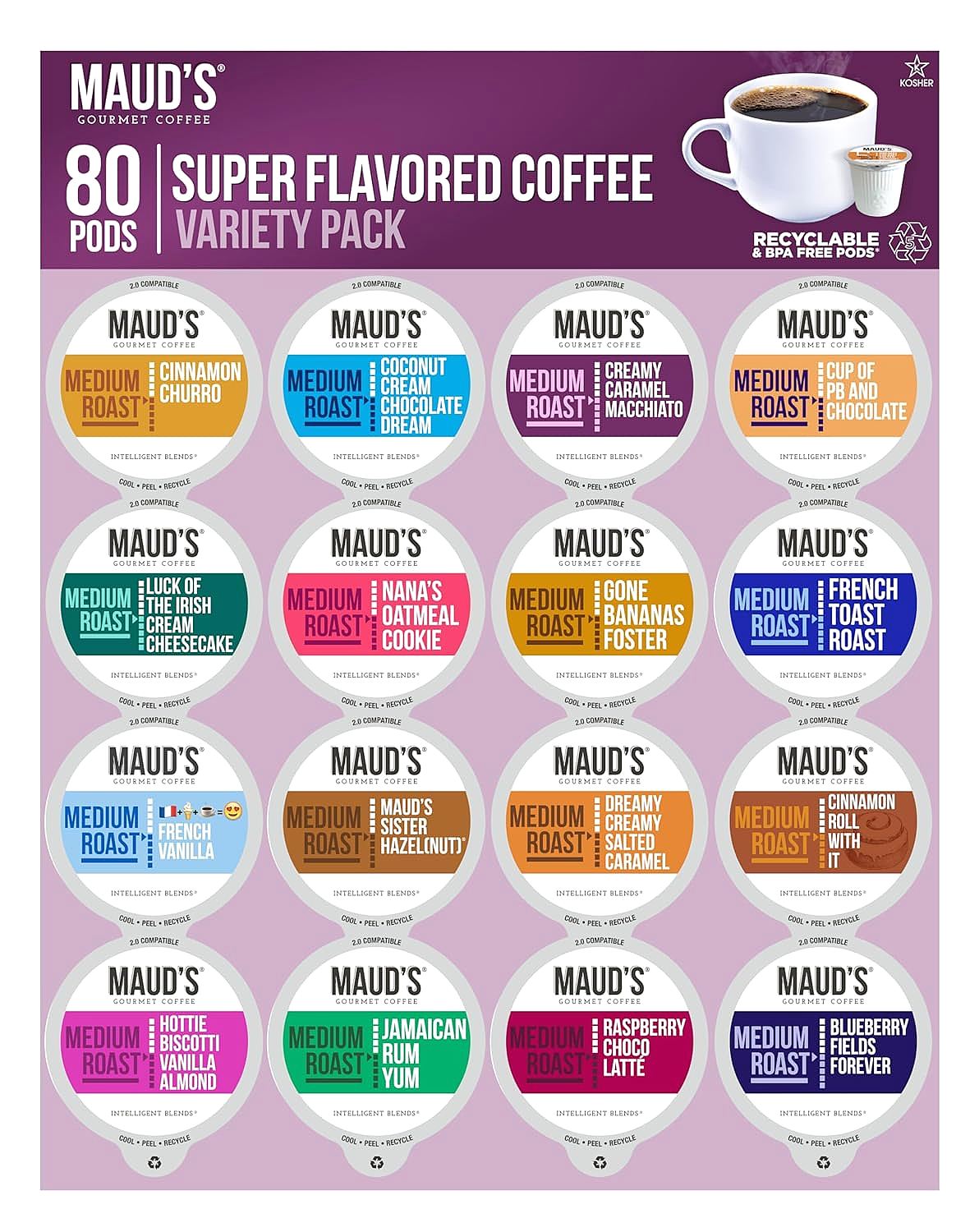
In the grocery aisle of the modern world, we are often paralyzed by the “Paradox of Choice.” When faced with too many options, we freeze. Yet, in the realm of coffee, we actively seek this abundance. The Maud’s Super Flavored Coffee Variety Pack, with its staggering 80 pods and 16 distinct flavors, is a testament to this desire. It promises a different sensory experience for every morning of the month.
But purchasing an 80-count box is not just a transaction; it is a commitment to a logistical and sensory journey. It raises questions that go beyond simple preference: How do flavor chemists capture the essence of “Bananas Foster” in a coffee bean? Why do some flavors seem to fade while others linger? And how does one manage a bulk inventory of perishable aromatics to ensure the last cup tastes as vibrant as the first?
This analysis explores the science of flavored coffee, the psychology of the variety pack, and the practical strategies for maximizing the value of a bulk purchase.
The Chemistry of Flavor Infusion
To understand why a variety pack exists, we must first understand how a coffee bean—which naturally tastes like, well, coffee—can be made to taste like a “Cinnamon Churro.”
The Carrier and the Aromatic
Coffee beans are porous sponges. After roasting, while the beans are still warm and their pores are open, roasters apply Flavoring Oils. These are typically a mixture of:
1. Natural or Artificial Aromatics: Concentrated chemical compounds (esters, aldehydes) that trigger specific olfactory receptors. For example, Isoamyl acetate smells like banana; Diacetyl (or its safer alternatives) gives the buttery note of caramel.
2. The Carrier Solvent: Usually Propylene Glycol or Ethyl Alcohol. This solvent dissolves the aromatics and helps them penetrate deep into the cellular structure of the bean. It then evaporates, leaving the flavor molecules locked inside.
The “Flavor Lock” Challenge
In a single-serve pod, this chemistry faces a unique challenge: Plastic Absorption. The Polypropylene (#5 PP) used in pods is generally inert, but over long periods, certain volatile organic compounds (VOCs) from the flavoring oils can migrate into the plastic or the sealant.
This is why variety packs can sometimes have “uneven” flavor intensity. A “Coconut Cream” flavor relies on highly volatile lactones which might dissipate faster than the heavy cinnamaldehyde used in a “Cinnamon” flavor. The “freshness” of the pod is dictated not just by the coffee, but by the stability of the specific flavor molecule used.
The Psychology of the Variety Pack
Why do we buy 16 flavors when we know we probably only love three of them? The appeal of the variety pack is rooted in Novelty Seeking and Risk Mitigation.
The “Morning Roulette”
For many, the morning routine is monotonous. A variety pack introduces a low-stakes element of surprise and playfulness. Choosing between “Salted Caramel” and “Raspberry Choco Latte” is a small act of agency that colors the start of the day. It transforms caffeine consumption from a biological necessity into a gustatory exploration.
The Inventory Problem: The “Leftover” Effect
However, the 80-count box introduces a classic supply chain problem known as “The Unwanted Skew.” In every variety pack, there are “Heroes” (the crowd favorites) and “Stragglers” (the polarizing flavors).
User reviews often mention boxes ending up with “only the weird flavors left.” This leads to a form of Sunk Cost Fallacy. The consumer forces themselves to drink the “Spicy Pumpkin” in April just to clear the box.
The engineering of the variety pack is a balancing act for the manufacturer. They must include enough “safe” flavors (Vanilla, Hazelnut) to anchor the value, while adding enough “exotic” flavors (Banana, Churro) to justify the “Variety” label.

Sensory Fatigue and Palate Calibration
Drinking flavored coffee daily can lead to Sensory Specific Satiety. If you drink “French Vanilla” every day for two weeks, your brain creates a sensory template and starts to “tune out” the vanilla notes. You stop tasting it.
The variety pack is the antidote to this adaptation. By switching from a fruit-forward profile (Raspberry) on Tuesday to a spice-forward profile (Cinnamon) on Wednesday, you force your olfactory system to recalibrate. This “resets” your palate, making each cup taste more vivid.
However, there is a risk of Cross-Contamination—not in the box, but in the brewer.
The flavoring oils are sticky. If you brew a “Mental Peppermint” pod, residue will linger in the exit needle and the brew chamber. If you immediately follow it with a delicate “Light Roast,” that second cup will have a ghostly aftertaste of mint.
The Pro Tip: In a variety pack scenario, the order of brewing matters. Always brew the strongest/spiciest flavors last, or run a “cleansing shot” (water only) between radically different flavor profiles to purge the oils.
Sustainability of the Bulk Buy
An 80-count box is a significant volume of material. While Maud’s emphasizes their solar-produced, recyclable pods, the sheer volume of plastic requires a conscious disposal strategy.
The “Recyclable” Reality Check
As discussed in engineering circles, small plastics (like pods) often fall through the sorting screens at Material Recovery Facilities (MRFs). To ensure your 80 pods actually get recycled, you cannot just toss them in the bin.
1. Peel: Remove the foil (trash).
2. Empty: Compost the grounds (garden).
3. Nest: Stack the plastic cups together. A stack of 10 cups behaves like a larger object, significantly increasing the chance that the optical sorters at the recycling plant will identify and capture the Polypropylene.
Strategic Inventory Management (FIFO)
Treating your coffee shelf like a warehouse optimizes the experience. * FIFO (First In, First Out): Flavor oils oxidize over time. Do not “save” the best flavors for a special occasion six months from now. They will be flat. Drink the most volatile flavors (fruit, citrus notes) first. Save the stable flavors (chocolate, caramel) for later. * The “Guest” Reserve: The polarizing flavors (often the fruit or super-sweet ones) are excellent “Guest Coffees.” A flavor you find cloying might be a delightful treat for a guest who rarely drinks coffee. The variety pack ensures you always have something to offer that feels “special.”
Conclusion: The Joy of the Mix
The Maud’s Super Flavored Coffee Variety Pack is more than a box of caffeine; it is a library of sensory experiences. It invites the user to become a curator of their own mornings. While the engineering of the pods ensures they work (mostly), and the chemistry of the flavors ensures they taste (mostly) as described, the true value lies in the freedom of choice.
By understanding the mechanics of flavor infusion and the logistics of variety, the consumer can transform a bulk purchase into a strategic asset. It turns the kitchen counter into a tasting lab, where the only limit is the willingness to try something that tastes like a dessert, brewed from a bean, inside a plastic cup.