The Unoccluded Office: Why Open-Ear is the Future of Hybrid Work and Long-Wear Comfort
Update on Jan. 14, 2026, 6:06 p.m.
The modern workplace has shifted. We spend hours on Zoom, Teams, and Google Meet. For many, this means wearing headphones for 4-6 hours a day. The traditional solution—In-Ear Monitors (IEMs) or Noise-Cancelling Over-Ears—creates a problem known as Ear Fatigue.
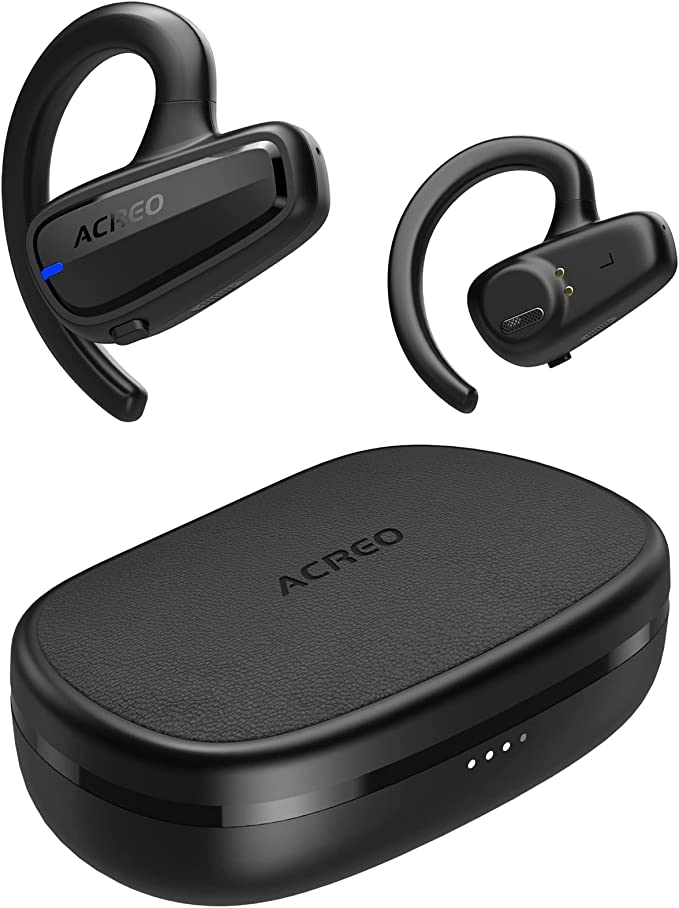
The ACREO A8 OpenBuds offer a radical alternative. While marketed heavily as sports headphones, their design philosophy addresses the core pain points of the hybrid worker: the Occlusion Effect, the need for Natural Sidetone, and the requirement for all-day comfort. This article explores why “Open-Ear” might be the ultimate productivity hack.
The Occlusion Effect: Why You Shout on Zoom
Put your fingers in your ears and speak. Your voice sounds boomy, hollow, and unnaturally loud inside your head. This is the Occlusion Effect. It happens when an object blocks the ear canal, trapping the low-frequency vibrations of your own voice (conducted through your jawbone) inside the canal space.
To compensate for this strange sensation, users subconsciously speak louder or strain their voices. Over a day of meetings, this leads to Vocal Fatigue.
The Open Solution
The ACREO A8 leaves the ear canal completely open. The low-frequency vibrations of your voice escape naturally. You hear yourself exactly as you would in a face-to-face conversation. This is Natural Sidetone. * Communication Quality: Because you hear your own voice naturally, you modulate your volume and pitch more effectively. * Reduced Fatigue: You stop fighting your own physiology. Meetings feel more like conversations and less like broadcasting from inside a submarine.
The Hygiene of Airflow
Wearing sealed earbuds for hours creates a warm, moist environment in the ear canal—a perfect breeding ground for bacteria. This can lead to otitis externa (swimmer’s ear) or simple irritation.
The ACREO A8’s Buds-Free Design ensures constant airflow. The ear canal remains dry and cool. The device rests on the Concha (the bowl of the ear) and hangs from the root of the ear via the hook. This shifts the mechanical load from the sensitive skin of the canal to the more robust cartilage of the outer ear. The result is a device that can genuinely be worn for an 8-hour workday without the “relief” sensation of taking it off.

Battery Anxiety in the Marathon Meeting
In a corporate setting, reliability is key. A dead headset mid-presentation is a nightmare. The ACREO A8 addresses this with a robust charging ecosystem.
The earbuds themselves offer 6 hours of continuous playtime. While this might seem average compared to some in-ears, it is sufficient for the longest meeting blocks. The critical component is the Charging Case, which extends the total time to 18 hours.
The case itself is larger than typical TWS cases (like AirPods). This extra bulk allows for a larger battery reservoir. More importantly, the ACREO A8 case supports Wireless Charging. This is a massive workflow advantage. You can simply leave the case on a Qi pad on your desk. Between meetings, you drop the buds in the case. The system is always topping up, always ready. It integrates seamlessly into the “desk setup” ecosystem.
Situational Awareness in the Home Office
For the work-from-home parent or the pet owner, total isolation is a liability. You need to hear the doorbell, the baby monitor, or the dog barking.
Active Noise Cancellation (ANC) with “Transparency Mode” attempts to solve this by using microphones to pipe outside sound in. However, this often sounds artificial, tinny, or amplified. The ACREO A8 provides True Transparency. You hear the world with your own ears, unaltered.
This allows for Multitasking. You can listen to a webinar while cooking lunch. You can take a call while walking the dog, fully aware of traffic. It blurs the line between “work mode” and “life mode,” which is the essence of hybrid work.
Conclusion: The Ergonomic Workhorse
The ACREO A8 is often pigeonholed as a “running headphone.” While excellent for that, its true genius lies in its application to the marathon of modern work. By solving the biological problems of occlusion and fatigue, and the logistical problems of charging and awareness, it proves that the best office headset might not cover your ears at all.
It represents a shift towards Humane Technology—devices that adapt to our biology rather than forcing us to adapt to them.