The Geometry of Access: Anatomical Engineering, Topography, and the Industrial Design of Oral Care
Update on Jan. 14, 2026, 9:12 a.m.
The human mouth is a hostile environment for engineering. It is wet, biologically active, and geometrically complex. The dental arch is a parabolic curve; the teeth are complex, multi-faceted polyhedrons; and the gumline is a delicate, undulating boundary. Designing a tool to navigate this terrain effectively requires more than just a motor; it requires a profound understanding of anatomical topography.
The challenge of oral hygiene is essentially a challenge of access. Plaque accumulation is not random; it follows the path of least resistance, thriving in the “shadows” where standard tools fail to reach. The Waterpik STW-03W020 Sensonic represents a response to this geometric challenge. Through its contoured bristle design, ergonomic weighting, and energy management, it illustrates how industrial design adapts to the unforgiving landscape of human biology. This article explores the structural engineering behind high-performance oral care tools.
Topological Conformity: The “Contour” Concept
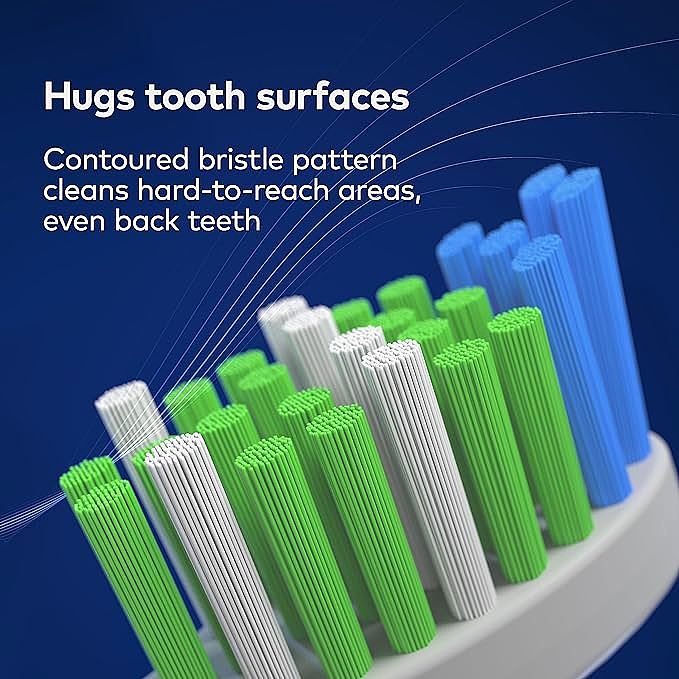
Standard, flat-trimmed toothbrushes operate on a flawed premise: that teeth are flat blocks. In reality, the occlusal (biting) surfaces of molars are valleys (fossae) surrounded by peaks (cusps). A flat brush bridges across the cusps, leaving the plaque in the deep central groove untouched.
The Physics of Bristle Profiling
The Sensonic Contour Brush Head addresses this mismatch through variable bristle height. * The High-Low Pattern: By arranging bristles in a specific wave-like profile, the brush head can mechanically interlock with the tooth’s surface. Longer bristles reach into the interproximal spaces (between teeth) and the gingival sulcus, while shorter, denser bristles polish the convex facial surfaces. * Surface Area Maximization: This contouring maximizes the contact surface area. According to the laws of friction, cleaning efficiency is proportional to the contact area and the shear force applied. By hugging the tooth, the contoured head ensures that the sonic energy is transferred directly to the biofilm rather than dissipating in the air gaps between the brush and the tooth.
End-Rounding and Enamel Safety
At the microscopic level, the geometry of the individual bristle tip is critical. Cut nylon filaments naturally have sharp, jagged edges. Under the high-frequency vibration of a sonic motor (thousands of cycles per minute), these sharp edges acts like micro-saws, scratching the enamel prism structure and abrading the gingiva. * The Polishing Process: High-quality manufacturing involves a secondary tumbling or polishing process to round the tips of each filament. This end-rounding ensures that the interaction between the bristle and the tooth is one of polishing rather than scratching. While invisible to the naked eye, this micro-geometry is the defining factor in preventing “toothbrush abrasion,” a common cause of sensitive teeth.
Ergonomics and Proprioception: The Hand-Mouth Connection
Effective brushing requires fine motor control. The user must manipulate the brush head to specific angles (the Bass Method recommends 45 degrees) in a space they cannot clearly see. This relies on proprioception—the body’s ability to sense movement and position.
The Center of Gravity
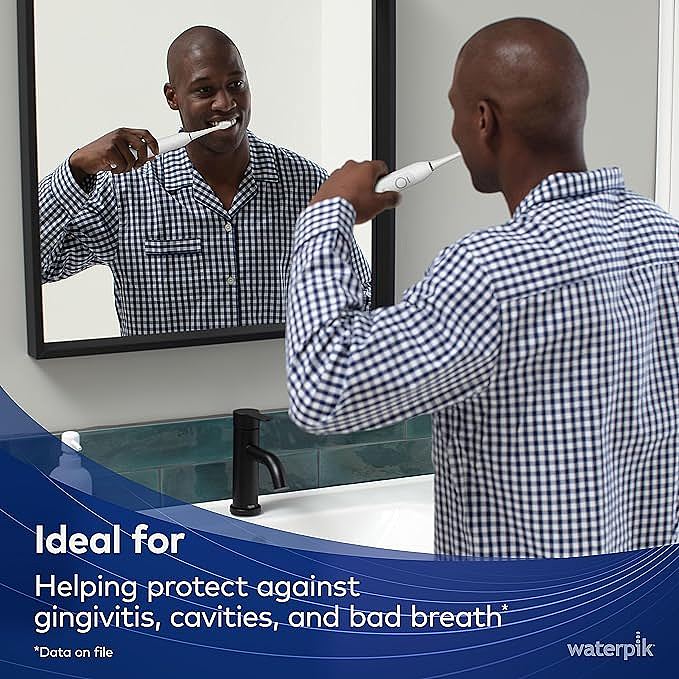
The design of the handle plays a crucial role in this sensory feedback loop. * Weight Distribution: The Sensonic features an ergonomic handle with a non-slip finish. Critically, the distribution of internal components (battery, motor, PCB) determines the device’s center of gravity. A top-heavy brush feels unstable and causes wrist fatigue; a bottom-heavy brush feels sluggish. A balanced centroid allows the brush to pivot naturally in the fingers, encouraging the user to guide the brush gently rather than gripping it fiercely. * Vibration Decoupling: A key engineering challenge in sonic brushes is ensuring the vibration goes to the head, not the hand. If the handle vibrates excessively, it causes user discomfort and “white finger” numbness. Structural dampening and suspension systems inside the chassis decouple the motor from the outer shell, isolating the kinetic energy where it is needed—at the bristles.
Energy Density and the Architecture of Autonomy
The transition from corded to cordless devices is constrained by energy density. A high-performance sonic motor requires significant current to maintain torque against the resistance of brushing.
Lithium-Ion Stability
The Sensonic utilizes a Lithium-Ion (Li-ion) battery, providing up to 4 weeks of use. This is not just a convenience feature; it is a performance feature. * Voltage Curve: Unlike older Nickel-Metal Hydride (NiMH) batteries, which suffer from a gradual voltage drop (making the brush feel weaker as the charge depletes), Li-ion maintains a relatively flat voltage curve. This ensures that the sonic frequency and amplitude remain consistent from the first day of the charge to the last. Consistent power is essential for consistent clinical results. * Travel Readiness: The high energy density of Li-ion allows for a smaller, lighter form factor, facilitating the inclusion of a premium travel case. This acknowledges a shift in lifestyle: oral hygiene is no longer tethered to the bathroom counter. The device must perform equally well in a hotel room or on a camping trip.
The Logic of Interface: Haptics and Feedback
In a tool used twice daily, the user interface must be intuitive to the point of invisibility. * The Single-Button Philosophy: Complex interfaces create friction. The Sensonic simplifies interaction, often using a single button or streamlined controls to toggle modes. * Chronobiological Cues: The built-in 2-minute timer and 30-second pacer act as behavioral guardrails. They externalize the cognitive load of tracking time, ensuring that the user adheres to clinical guidelines without conscious effort. This haptic signaling (a brief pause in vibration) communicates directly with the user’s tactile sense, bypassing the need for visual displays.
Conclusion: Engineering for Biology
The Waterpik Sensonic is more than a collection of plastic and copper; it is a response to the biological imperatives of the human mouth. Its contoured bristles respect the topography of the teeth; its balanced motor respects the limits of the hand; and its energy system respects the mobility of modern life. By engineering the tool to fit the organism, rather than forcing the organism to adapt to the tool, such devices elevate oral care from a chore to a precision discipline.