The Neckband Paradox: The Evolutionary Logic Behind the Survival of Tethered Wireless Audio
Update on Jan. 14, 2026, 9:10 a.m.
In the relentless trajectory of consumer electronics, miniaturization is usually the ultimate teleology. The market’s aggressive pivot to True Wireless Stereo (TWS) earbuds—exemplified by the AirPods phenomenon—seemed to herald the extinction of all other portable audio forms. The “wire” was declared dead, an archaic vestige of the analog era. Yet, defying this evolutionary pressure, the “Neckband” or “Behind-the-Neck” form factor, represented by devices like the Sony WI-C100, has not only survived but flourished in specific ecological niches of the audio market.
This survival is not an accident of nostalgia or merely a consequence of pricing tiers. It is rooted in the immutable laws of physics and ergonomics. The neckband form factor represents a “convergent evolution” solution to the fundamental constraints of wearable technology: energy density, radio frequency (RF) propagation, and user retention mechanics. While TWS earbuds prioritize invisibility and minimalism, neckbands prioritize operational endurance and interface reliability. Understanding the engineering logic behind this persistent design reveals the hidden trade-offs that define the current state of mobile audio.
The Physics of Energy Density and Volumetric Efficiency
The primary limitation of any portable electronic device is its power source. Battery technology has not kept pace with the efficiency gains of processors. Lithium-ion chemistry remains bound by specific energy density limits (roughly 250-700 Wh/L). This creates a zero-sum game in design: volume equals runtime.
The Volume Penalty of TWS
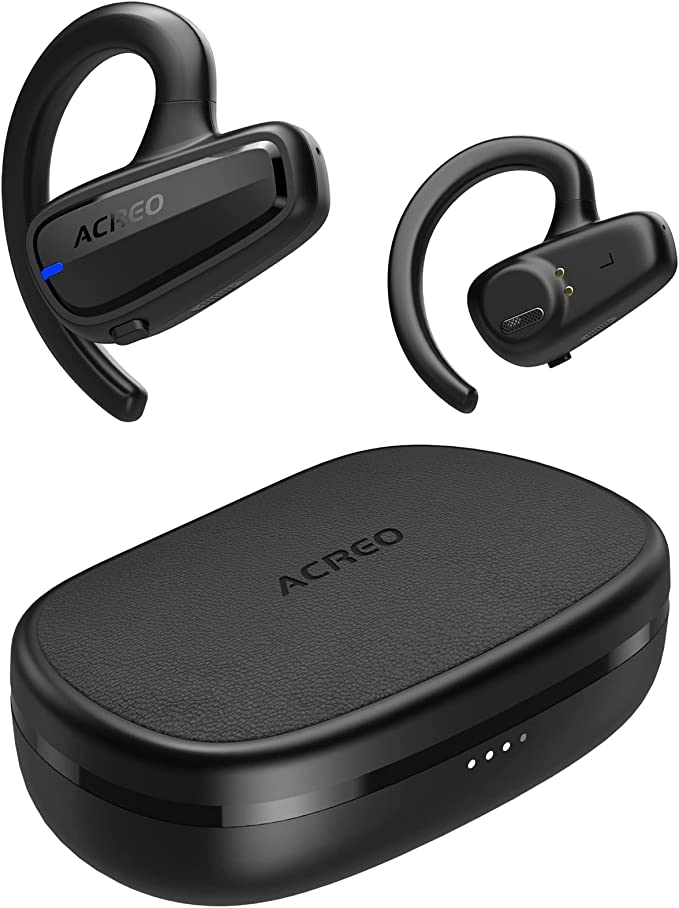
In a True Wireless earbud, the entire system—battery, Bluetooth SoC (System on Chip), antenna, driver, microphone, and charging circuitry—must fit within the concha of the ear. This imposes severe volumetric constraints. * Battery Constraints: TWS batteries are typically coin-cell or tiny cylindrical types with capacities ranging from 35mAh to 50mAh. This physically limits playback time to 5-8 hours per charge. * Thermal Throttling: The extreme component density means heat dissipation is poor. To prevent overheating in the ear canal, charging speeds must be regulated, and processor clock speeds (for ANC or audio processing) must be balanced carefully against thermal generation.
The Neckband Advantage: Externalized Power
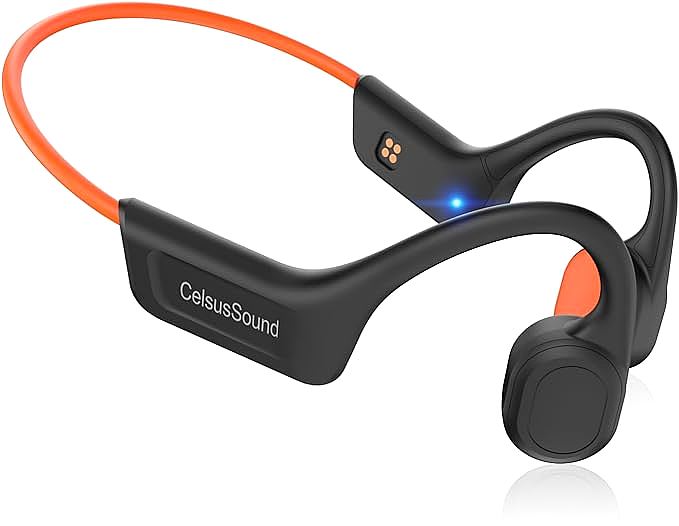
The neckband architecture, as seen in the WI-C100, decouples the power source from the acoustic driver. By moving the battery to the band resting on the clavicle, engineers gain access to vastly more internal volume. * Capacity Scaling: A neckband can easily house a 200mAh to 300mAh battery without affecting comfort. This is why the WI-C100 boasts a 25-hour battery life—triple that of standard TWS buds. * Linear Efficiency: This endurance is “linear,” meaning it is available in a single continuous session. TWS earbuds rely on a charging case to achieve “24-hour” claims, necessitating frequent interruptions to recharge. For users engaged in continuous activities—long-haul flights, marathons, or 12-hour shifts—the neckband’s single-charge endurance is a functional necessity that TWS physics cannot currently match.
Radio Frequency Propagation and the Human Shadow
Wireless audio relies on the 2.4 GHz ISM (Industrial, Scientific, and Medical) radio band. This frequency has a wavelength of approximately 12.5 centimeters. A significant challenge in Bluetooth audio is that the human head is roughly the size of this wavelength and consists largely of water, which is highly absorbent of 2.4 GHz signals.
Cross-Head Attenuation (The “Meatbag” Problem)
In early TWS designs, the “Master” earbud had to transmit the audio signal through the user’s head to the “Slave” earbud. The human brain and skull act as a massive RF attenuator, blocking the signal. This led to the notorious connection dropouts. Modern TWS uses “Sniffing” or dual-transmission technologies to mitigate this, but it requires sophisticated, power-hungry synchronization protocols.
The Wired Bridge Solution
Neckbands bypass this RF nightmare entirely by using a physical wire to connect the left and right drivers. * Signal Integrity: The synchronization between left and right channels is handled via a copper conductor, which introduces zero latency and zero interference potential relative to a wireless link. * Antenna Placement: The Bluetooth antenna in a neckband can be placed in the control pod on the shoulder, further away from the detuning effects of the ear cartilage and skull. This often results in a more stable connection range and better resilience to interference in crowded RF environments (like subway stations) compared to TWS buds where the antenna is buried inside the ear.
Ergonomics of Retention and the Psychology of Loss
Beyond physics, the survival of the neckband is driven by behavioral psychology and the mechanics of retention. TWS earbuds introduce a new anxiety: the fear of loss. The “liberation” from wires comes with the cognitive load of constantly monitoring two small, unconnected objects.
Passive Retention and “Ready-State” Utility
The defining feature of the neckband is its ability to hang securely when not in use. This creates a “Ready-State” that TWS lacks. * The Interaction Cost: To use TWS buds, one must: locate case -> open case -> extract buds -> insert in ears. To stop, the reverse is required. This high interaction cost discourages brief listening or quick calls. * The Neckband Workflow: The buds are already physically attached to the user. The transition from “standby” to “active” takes milliseconds. For couriers, office workers, or tradespeople who need intermittent audio, the neckband offers superior workflow ergonomics. The WI-C100’s design, often featuring magnetic buds (though basic in this specific model), reinforces this utility, allowing the device to form a closed loop around the neck.
Stability Vectors in Kinetics
In active scenarios (running, gym), TWS retention relies solely on the friction fit of the ear tip and the geometry of the concha. Sweat acts as a lubricant, reducing friction and increasing the risk of ejection. * Strain Relief: The wires on a neckband like the WI-C100 act as a safety tether. If a bud slips out, it falls to the shoulder, not the asphalt. * Weight Distribution: By shifting the mass of the battery and logic board to the neck/shoulders, the earpieces themselves can be made lighter and smaller than TWS buds. This reduces the inertial force acting on the ear canal during sudden head movements, paradoxically making the actual in-ear portion more stable and comfortable for long durations.
Economic and Manufacturing Rationalization
Finally, the industrial logic of the neckband favors the budget segment. TWS earbuds require miniaturized, high-density PCBs, specialized micro-batteries, and complex charging cases with their own batteries and management circuits. This complexity sets a high price floor for quality.
- Cost Efficiency: A neckband removes the need for a charging case and allows for the use of standard, off-the-shelf rectangular pouch cells and larger, less dense PCBs. This reduction in manufacturing complexity allows companies like Sony to allocate budget towards better audio drivers or features like DSEE (Digital Sound Enhancement Engine) in the WI-C100, rather than spending it on miniaturization.
- Repairability and Waste: While most wearables are difficult to repair, the larger chassis of a neckband is theoretically easier to open and service than a glued-shut TWS bud. Furthermore, the longer single-charge cycle life of the larger battery means it undergoes fewer charge-discharge cycles per year than a tiny TWS battery, potentially extending the total service life of the product before the battery degrades—a small victory for sustainability in a disposable electronics culture.
Conclusion: The Specialized Tool
The narrative that TWS will kill the neckband assumes that all users prioritize total wireless freedom above all else. However, the analysis of energy density, RF physics, and ergonomics proves that the neckband is not a transitional fossil, but a specialized tool. It is the “workhorse” truck to the TWS “sports car.” Devices like the Sony WI-C100 persist not because they failed to evolve, but because they evolved to solve a different set of problems: the need for reliable, all-day endurance and secure retention in a chaotic world. As long as battery physics remains a constraint and gravity remains a force, the wire—at least the one around the neck—will have a place.