The Engineering of Endurance: Battery Chemistry, Material Science, and the Logistics of Long-Term Oral Care
Update on Jan. 14, 2026, 9:09 a.m.
In the consumer electronics sector, “anxiety” is a common user experience—range anxiety for EVs, battery anxiety for smartphones. This same anxiety plagues the world of electric toothbrushes, where frequent charging docks clutter bathroom counters and devices die mid-brush. However, a new generation of devices is rewriting this narrative through the optimization of energy density and consumable logistics.
The BAOVERI D12, with its claimed 60-day battery life and inclusion of a 2-year supply of brush heads, represents a shift towards “install-and-forget” engineering. This article moves beyond the cleaning action to analyze the supporting infrastructure of the device: the electrochemistry that powers it, the material science of its bristles, and the supply chain logic that makes long-term hygiene accessible.
Energy Density and the 60-Day Cycle
Achieving two months of operation on a single charge in a device that drives a motor at 42,000 vibrations per minute is a significant engineering feat. It requires a holistic approach to power management.
Lithium-Ion Efficiency
The heart of this endurance is the 800mAh Lithium-Ion (Li-ion) battery. * Volumetric Efficiency: Unlike older Nickel-Metal Hydride (NiMH) batteries that were bulky and suffered from memory effect, Li-ion offers high energy density in a compact cylinder. Fitting 800mAh into a slim handle requires precise internal packaging, often utilizing the battery casing as a structural element of the chassis. * Discharge Curve: The critical factor for a toothbrush is voltage stability. A motor needs consistent voltage to maintain its frequency. If the voltage drops as the battery drains, the 42,000 VPM would slow down, reducing cleaning efficacy. Modern Li-ion cells maintain a flat discharge curve, ensuring that the brush performs as well on day 59 as it did on day 1.
Low-Quiescent Current Circuitry
Endurance is also about what happens when the device is off. * Standby Power: A device sitting on a shelf consumes power to monitor the power button. Advanced microcontrollers (MCUs) used in these devices utilize “deep sleep” modes with nano-ampere quiescent currents. This ensures that the energy is preserved for the motor, not lost to parasitic drain during the 23 hours and 56 minutes of the day the brush is idle.
The Logic of Bulk Consumables: A Supply Chain Shift
The inclusion of 8 brush heads is not just a value-add; it is a structural intervention in user behavior. * The Replacement Friction: Dentists recommend changing brush heads every 3 months. However, user compliance is low, often because buying new heads is a hassle or expensive. This leads to the use of splayed, bacteria-laden bristles that damage gums. * Removing the Barrier: By bundling a 2-year supply (8 heads × 3 months), the manufacturer removes the transactional friction. The user has the inventory on hand. This aligns the economic model with the biological necessity of hygiene. From a supply chain perspective, shipping 8 heads in one box reduces the carbon footprint and packaging waste associated with shipping 8 individual replacements over two years.
Material Science: The “W” and “U” Topographies
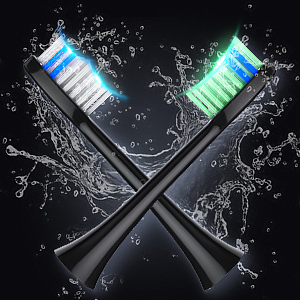
The brush heads themselves are marvels of micro-engineering. The D12 includes two distinct geometries: “W” shape and “U” shape.
* Anatomical Conformity:
* “W” Shape (Wave): This profile is designed to match the natural curvature of the dental arch and the interproximal gaps. The peaks of the “W” reach between teeth, while the valleys cradle the tooth surface. This maximizes contact area during the sweep.
* “U” Shape (Cup): Likely designed to cup individual teeth, similar to professional polishing cups. This geometry focuses on the facial and lingual surfaces, providing a thorough scrub of the enamel.
* DuPont Tynex Filaments: The use of DuPont bristles indicates a focus on material quality. Nylon 612 (Tynex) is the industry standard for its low water absorption (which prevents bacterial growth) and high bend recovery (it snaps back to shape after thousands of cycles).
* End-Rounding: Crucially, the mention of “rounded” bristles refers to the mechanical polishing of the filament tips. Under a microscope, a cut nylon filament is sharp and jagged. Rounding these tips into domes is essential to prevent micro-abrasion of the enamel and gingiva during high-speed vibration.
Hermetic Sealing: The IPX7 Standard
Electronics and water are natural enemies. Achieving an IPX7 rating (submersion up to 1 meter) in a budget-friendly device involves rigorous design choices. * Ultrasonic Welding: The housing is likely assembled using ultrasonic welding, creating a permanent molecular bond between plastic parts that is impervious to water, superior to screws or glues. * Button Membranes: The interface buttons (“Power” and “Mode”) are potential leak points. Utilizing a continuous silicone membrane or over-molding technique seals these actuators while providing tactile feedback. * Port Sealing: The charging port (often at the bottom) must be protected. Whether through a tight-fitting silicone plug or an internal waterproof chamber design, maintaining this seal is critical for the device’s longevity in the humid bathroom environment.
Conclusion: The Engineering of Reliability
The BAOVERI D12 illustrates a maturation in the personal care industry. High-performance features—long-life lithium batteries, sophisticated bristle geometries, and hermetic sealing—are no longer the exclusive domain of luxury brands. By optimizing the energy management system and restructuring the consumable supply chain, engineers have created a device that respects the user’s time and wallet. It transforms oral hygiene from a high-maintenance chore requiring constant charging and shopping into a seamless, reliable background process of daily life.