What IPX7 Waterproofing *Really* Means (And Why Your Earbuds Still Failed)
Update on Nov. 4, 2025, 1:08 p.m.
You’ve seen the label on the box for your new wireless earbuds: “IPX7 Waterproof.” It conjures images of running in a downpour or shrugging off an accidental drop into the sink, soundtrack uninterrupted.
But let’s be honest. You might also be here because a previous pair of “waterproof” earbuds mysteriously died after a few sweaty months at the gym, or you’re wondering if you can really take them swimming.
If so, you’ve stumbled upon one of the biggest gaps between a technical rating and real-world experience.
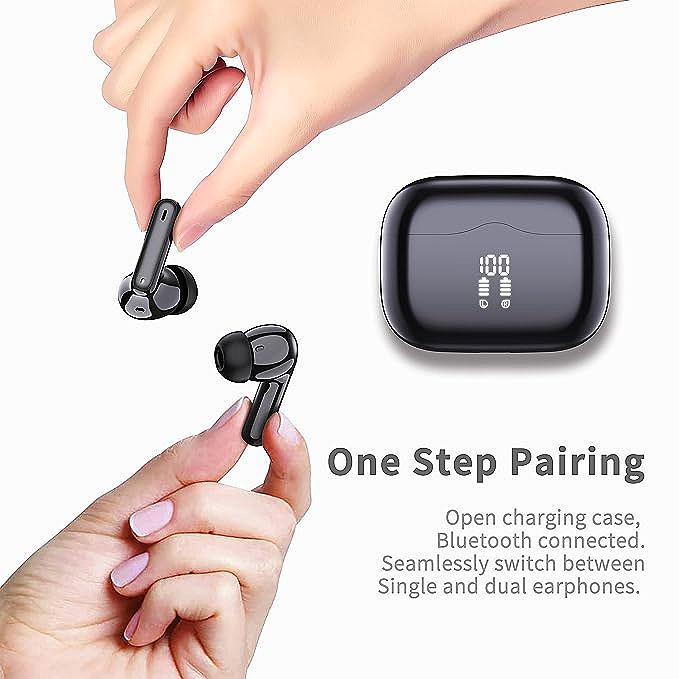
That “waterproof” label isn’t a magical shield; it’s a specific, scientific grade. Understanding what that grade doesn’t cover is the key to making your technology last. We can use a common example, like the Xinwld A97 Pro earbuds which list an “IP7” rating, not as a review, but as a perfect case study to understand this technology.
This is the owner’s manual you were never given.
Decoding the Code: What Does “IPX7” Actually Mean?
First, let’s break down that code. It’s not marketing fluff; it’s an international standard called Ingress Protection (IP), set by the International Electrotechnical Commission (IEC). Think of it as a gadget’s score on a standardized obstacle course.
- I and P stand for Ingress Protection.
- The First Digit (e.g., the ‘X’): This number rates protection against solids, like dust and sand. It goes from 0 (no protection) to 6 (completely dust-tight). When you see an ‘X’, it simply means the product was not tested for a dust rating. This is common for earbuds, as the primary danger is liquid.
- The Second Digit (e.g., the ‘7’): This is the one you care about. It rates protection against liquids.
An “IP7” rating (like the one on the Xinwld A97 Pro) means the “X” is just unstated, but the liquid protection is a 7.
So, what does that “7” specifically guarantee?
To earn its “7,” a device must survive being fully submerged in up to 1 meter (about 3.3 feet) of fresh water for 30 minutes without harmful amounts of water getting inside.
That sounds incredibly robust. And for its specific purpose—surviving an accidental, brief dunk in clean water—it is.
But the lab test is not your life. The real trouble starts when you misunderstand the three crucial limits of that test.
The Fine Print: 3 Reasons Your “Waterproof” Gadget Fails
The IP rating is a controlled experiment. Here’s what that experiment doesn’t test for.
1. The Water Isn’t Your Water
The test is only performed using fresh, clean water. The water you encounter in the real world is a chemical soup. * Seawater is loaded with corrosive salt. * Pool water is treated with chlorine, a chemical that degrades rubber seals. * Tap water contains minerals. * Shower water is full of soap, shampoo, and conditioner, which are surfactants—chemicals designed to break down oils and surface tension, making them exceptionally good at working their way past seals.
2. The Pressure is Wrong
The IPX7 test is static. The device is gently lowered into 1 meter of still water and left alone. It does not account for dynamic pressure—the force of moving water. * Swimming: The motion of your arm strokes creates pressure spikes far greater than just sitting at a 1-meter depth. * Showering: A blast from your showerhead is a high-pressure jet of water, not a gentle soak. * Running in the Rain: A driving, wind-blown rain hits with more force than you’d think.
This is why you should never, ever swim or shower with IPX7 earbuds. The rating does not, and was never intended to, cover those activities.
3. Temperature is a Seal-Killer
The test is done at an ambient room temperature. A hot tub, sauna, or even a hot shower introduces two new enemies: * Steam: Water vapor can penetrate seals that liquid water can’t. * Expansion & Contraction: Rapid temperature changes cause the device’s housing and its tiny rubber gaskets to expand and contract at different rates. This can create microscopic gaps over time, permanently breaking the seal.
The Real Killer Isn’t Water. It’s Corrosion.
Here is the most important secret the IP rating doesn’t tell you.
The IP rating is only about ingress—stopping water from getting inside the delicate electronics. It says absolutely nothing about what happens to the parts left outside.
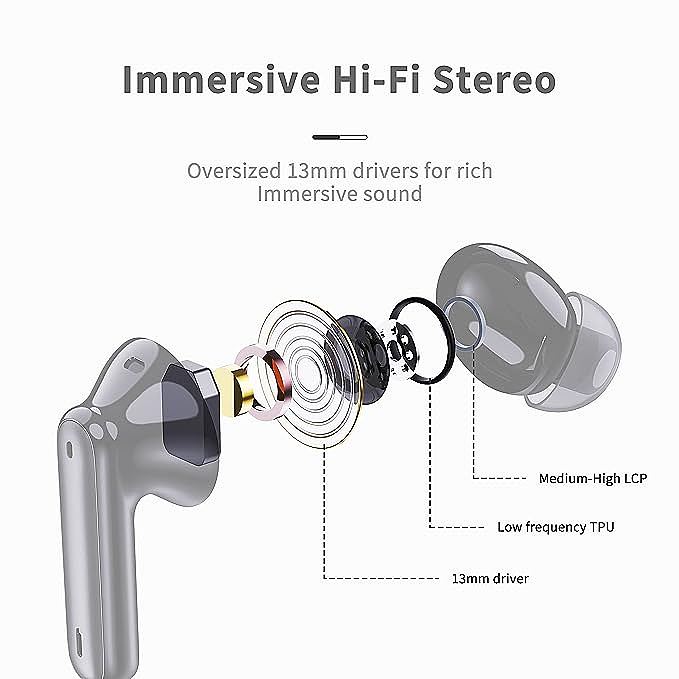
For earbuds, this means the exposed metal charging contacts.
When these contacts are exposed to moisture, an electrochemical reaction called corrosion begins. This process is drastically accelerated by the salt and acid in your sweat. That green, crusty residue you might find on old electronics? That’s corrosion.
Once it forms on those tiny contact points, it acts as an insulator, preventing electricity from flowing. This is the “mysterious” failure: * One earbud stops charging. * The earbuds charge intermittently. * The earbuds don’t “turn on” when you take them out of the case.
The device’s internal parts might be perfectly dry, but if it can’t get power, it’s a brick. This is, by far, the most common way “sweat-proof” earbuds die.
It’s such a known issue that some manufacturers, like the one for our Xinwld A97 Pro example, explicitly state in their notes: “Please wipe the metal parts of the headphones with a dry cloth after exercise to avoid corrosion by sweat.”
That single sentence is more valuable than the entire IP7 rating.
The True “Waterproof” Care Routine (That You Must Follow)
So, how do you make your gear last? You treat the IP rating as a safety net for accidents, not a feature to be used. And you follow this care routine religiously.
- Dry Your Device After Every Wet or Sweaty Use. This is not optional. Use a soft, dry, lint-free cloth. Don’t just wipe the outside; pay special attention to the charging contacts, seams, and microphone ports.
- Air Them Out Before Charging. This is the most critical step. Never, ever put damp earbuds back into their charging case. The case is a sealed environment, creating a humid “petri dish” for corrosion. Leave them out on your desk for at least an hour to air-dry completely.
- Clean the Contacts Periodically. Inspect the metal contacts on both the earbuds and inside the case. If you see any grime or dullness, gently clean them with a dry cotton swab. For stubborn buildup, a swab lightly dampened with isopropyl alcohol (and then allowed to dry) works wonders.
- Rinse with Fresh Water (If Exposed to Salt/Chlorine). If you do drop your device in the ocean or a pool, and the manufacturer confirms it’s safe to rinse, give it a gentle rinse with clean, fresh water as soon as possible to wash off the corrosive chemicals. Then, dry it and air it out immediately.
Conclusion: Knowledge is Your Best Protection
An IPX7 or IP7 rating is a great feature. It means your device, like the Xinwld A97 Pro, has been engineered to withstand the most common accidents in life: a run in the rain, a sweaty workout, or a splash at the sink.
But “waterproof” does not mean “invincible.” It’s a measure of resistance, not a guarantee against all conditions.
Now you’re an informed owner. You know that the real-world enemies are pressure, chemicals, and, most of all, the slow, silent creep of corrosion. The IP rating is the device’s protection. Your knowledge—and a dry cloth—is its salvation.