The Modular Hygiene Toolkit: Engineering Specificity, Volumetric Autonomy, and the Evolution of Oral Care Hardware
Update on Jan. 14, 2026, 9:12 a.m.
In the toolbox of personal health, the “one size fits all” philosophy is rapidly becoming obsolete. The complexity of the human mouth—with its unique arrangements of teeth, gums, and often artificial appliances like braces or bridges—demands a modular approach. A generic stream of water is useful, but a specialized stream tailored to a specific anatomical challenge is transformative.
The Leominor Cordless Water Dental Flosser embodies this shift towards specificity. By providing a comprehensive suite of 7 specialized nozzles and a high-capacity reservoir, it moves beyond being a simple irrigator to becoming a configurable hygiene platform. This article analyzes the engineering logic behind this modularity, exploring how nozzle geometry alters fluid dynamics and how volumetric capacity influences user behavior.
The Fluid Dynamics of Nozzle Geometry
The “Jet Tip” is the final interface between the machine and the body. Its internal geometry dictates the shape, velocity, and focus of the water stream. Changing the tip fundamentally changes the tool.
The Orthodontic Hybrid: Mechanics + Hydraulics
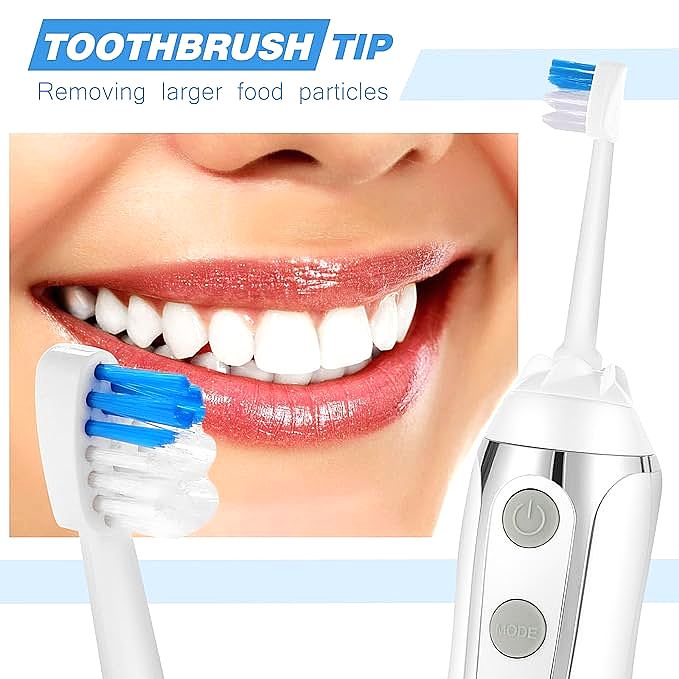
For patients with braces, plaque accumulation around brackets is a primary cause of decalcification. A standard water jet can miss the sticky biofilm on the bracket surface. * The Orthodontic Tip: Leominor includes a specialized tip with a tapered brush head surrounding the water exit. This creates a dual-action cleaning mechanism. The bristles mechanically agitate the debris (scrubbing), while the water jet simultaneously flushes it away (hydraulics). This hybrid approach addresses the specific “shadow zones” created by orthodontic hardware that neither brushing nor flossing alone can easily clear.
The Periodontal Stealth: Low-Pressure Delivery
Periodontal pockets are vulnerable. Blasting them with high pressure can be damaging. * The Periodontal Tip: This nozzle typically features a soft, flexible rubber tip with a narrowed lumen. The physics here involves flow restriction. By narrowing the exit, the volume is reduced, and when used with low-pressure settings, it allows for the gentle instillation of water or medicated rinses deep into the pocket. The flexible tip prevents mechanical trauma to the inflamed gum tissue, turning the device into a therapeutic delivery system rather than just a cleaner.
The Tongue Cleaner: Surface Area Management
Oral malodor (halitosis) largely originates from bacteria trapped in the papillae of the tongue. * The Spoon Shape: The tongue cleaner tip is shaped like a spoon or scraper. Instead of a focused jet, the water is spread into a fan or used to lubricate the scraping action. This design maximizes surface area contact, effectively sweeping the bacterial coating from the broad, textured surface of the tongue.
Volumetric Autonomy: The 300ml Threshold
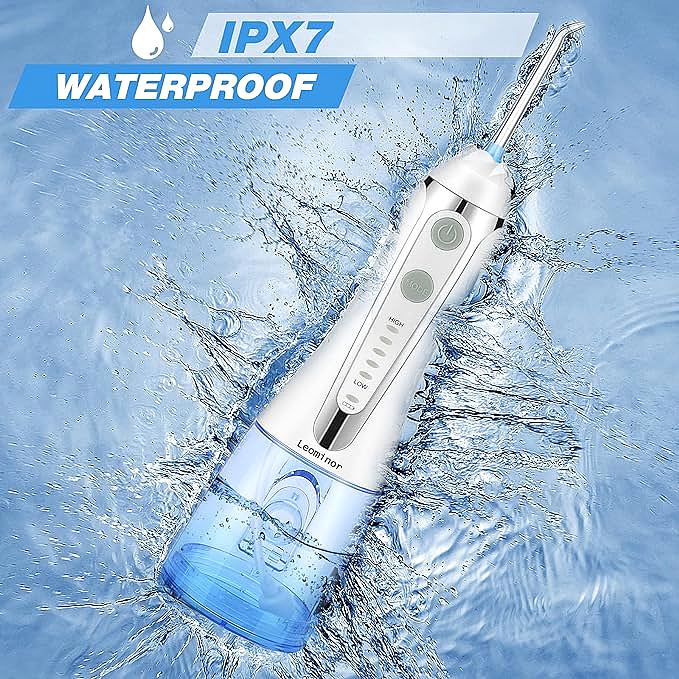
In portable design, tank size is a constant trade-off against ergonomics. Too small, and the user must refill mid-session; too large, and the device becomes heavy. * The 60-Second Benchmark: Dental professionals generally recommend flossing for at least 60 seconds to ensure all quadrants are cleaned. At typical flow rates (approx. 200-300ml/min for high-pressure settings), a 150ml tank (common in older models) runs dry in 30-40 seconds. This forces a break in the routine to refill, which is a significant friction point reducing compliance. * The 300ml Solution: The Leominor’s 300ml reservoir hits the “Goldilocks zone.” It provides enough volume for a complete, uninterrupted cleaning session without refilling, yet remains compact enough to hold comfortably. This “volumetric autonomy” ensures that the user can focus on the cleaning process rather than water management.
The Open-Tank Architecture
Hygiene of the device itself is critical. Closed tanks are breeding grounds for mold. * Detachable and Wide-Mouth: The Leominor tank is fully detachable and features a wide opening. This allows for mechanical scrubbing of the tank interior and complete air drying between uses—an essential feature for preventing bio-contamination of the water supply.
Energy Density and Travel Readiness
The utility of a portable device is defined by its independence from the grid. * 2500mAh Lithium-Ion: The inclusion of a large-capacity battery (2500mAh) significantly extends the duty cycle. With a typical draw, this supports 15-30 days of usage. This density allows the user to travel for weeks without bringing a charger, reducing “cord clutter” and making the device a true travel companion. * USB Standardization: Charging via a standard USB cable (5V/1A) further enhances portability, allowing the device to charge from laptops, power banks, or universal phone adapters, decoupling it from proprietary voltage converters.
Conclusion: The Specialized Generalist
The Leominor Cordless Water Flosser represents the maturity of the portable oral care category. It acknowledges that “cleaning teeth” is not a singular task but a collection of specific challenges—brackets, pockets, tongue, surfaces. By providing a modular system of tips and supporting it with the volumetric and energetic capacity to perform a complete job, it empowers the user to act as their own dental hygienist. It is a tool that adapts to the user’s anatomy, rather than forcing the user to adapt to the tool’s limitations.